Last Updated: November 1, 2026
Quick Summary
To remove scuffs from a car dashboard, start with a microfibre cloth and a pH-neutral interior cleaner, wiping in one direction with light pressure; this lifts transferred material in most cases. If the mark remains, move to a mild polishing compound on smooth plastic, or use interior dressing to disguise it. Always clean first, and skip abrasion on textured, soft-touch or leather panels.
- Run a fingernail across the mark: if it glides, it is a scuff; if it snags, it is a scratch.
- Spray interior cleaner onto the cloth, not the dashboard, to avoid soaking seams and electrics.
- Use a soft detailing brush on textured plastic rather than scrubbing across the grain.
- With heat, stop if two short hairdryer passes have not shifted the mark.
- Call a professional if the scratch shows a different colour underneath or sits near airbag panels.
Table of Contents
- How to remove scuff marks from a car dashboard: start with identification
- Dashboard cleaning products: what to use before any treatment
- Method 1: Microfibre cloth and interior cleaner for transferred material
- Method 2: Mild polishing compound for light surface marks
- Method 3: Interior dressing to disguise or tone down marks
- Method 4: Heat and friction for textured plastic trim
- Method 5: Leather car interior scuff repair for soft-touch surfaces
- Car dashboard scratch repair: when DIY is not enough
- Frequently Asked Questions
How to remove scuff marks from a car dashboard: start with identification
Most dashboard marks that look like scratches are actually scuffs, and the methods below remove scuffs without damaging the finish.
That fingernail test is the single most useful check you can do. Run it gently across the mark.
At Uniqcare, we repair furniture and vehicle interiors across the West Midlands.
Watch out: aggressive rubbing on a scratch lifts the surrounding texture and leaves a shiny patch that stands out more than the original mark.
If the scuffing is part of wider wear and you are weighing up whether to sort it at all, it helps to know how interior restoration affects resale value before you spend time on it.
Dashboard cleaning products: what to use before any treatment
Before you touch a single mark, clean the panel. Dirt trapped in a cloth acts like sandpaper, and that turns a harmless scuff into a permanent scratch. The right products depend on the finish, because a cleaner that is safe on hard plastic can dull a soft-touch coating or lift colour from leather.
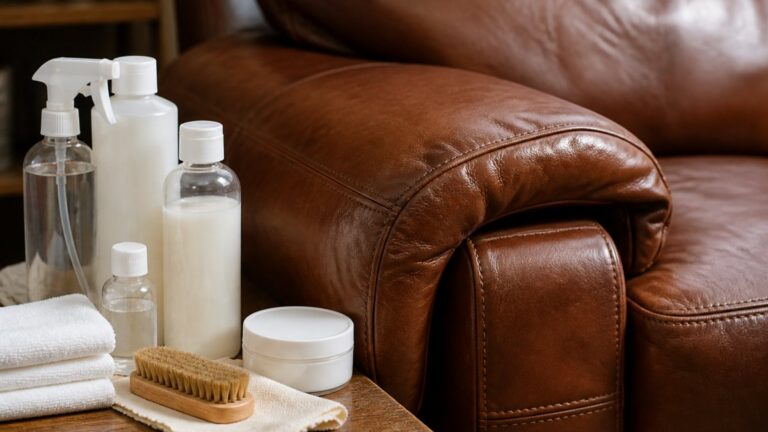
Here is what to have ready:
- Microfibre cloths (several, so you are not spreading dirt around)
- A pH-neutral interior cleaner (not a household multi-surface spray)
- A soft detailing brush for vents and textured areas
Work in shade and on a cool dashboard. Hot plastic softens and marks more easily, and cleaners flash off too fast to lift anything.
Match the cleaner to the dashboard finish
Most modern dashboards fall into one of three groups, and each responds differently to cleaning:
- Hard, smooth plastic (common on base trims and older vehicles): tolerant of a pH-neutral interior cleaner and light agitation with a soft brush. Avoid solvent-heavy sprays, which leave a chalky bloom.
- Textured plastic (the grain pattern you can feel): the texture traps dirt in the valleys, so use a soft detailing brush rather than a cloth alone. Never scrub across the grain with a stiff brush, as this flattens the peaks and leaves a shiny patch.
- Soft-touch and coated surfaces (the rubberised feel on many upper trims): these carry a thin coating that gives the matte look. Solvents, alcohol-based wipes and repeated rubbing wear that coating away, leaving a permanent shiny area. Use the mildest pH-neutral cleaner you can and dab rather than scrub.
If you are unsure which finish you have, check an inconspicuous area first, such as the underside of the dash or inside the glovebox. Spray onto the cloth, not the dashboard, so you do not soak into seams or electrics.
A common mistake is reaching for an all-purpose kitchen cleaner. Many contain solvents that dull the finish and strip the protective coating, which leaves a chalky patch you cannot wipe away.
If a cleaner’s label does not state that it is safe for interior plastics or leather, treat it as unsuitable until you have tested it on a hidden area.
Once the panel is clean and dry, you are ready to assess the mark properly and choose a method.
Method 1: Microfibre cloth and interior cleaner for transferred material
This is the first method to try, and it will remove scuffs in the majority of dashboard cases.
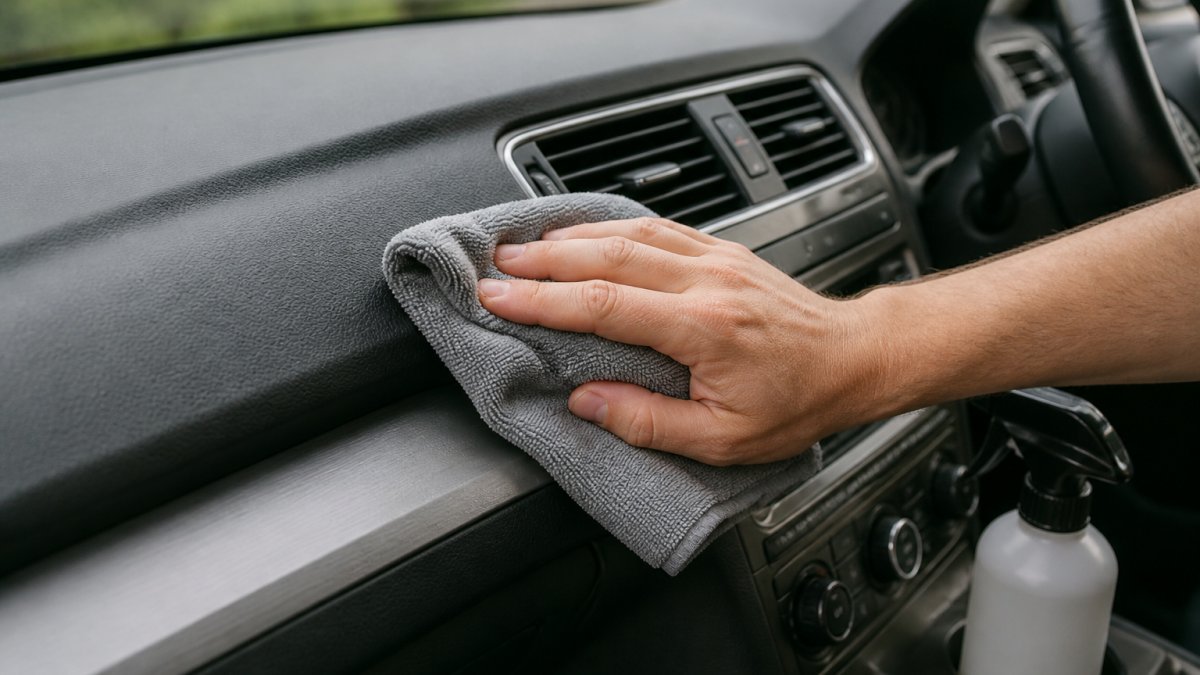
Steps:
- Spray interior cleaner onto a folded microfibre cloth until damp, not wet.
- Wipe the scuff in one direction with light pressure.
- Switch to a clean section of cloth and buff dry.
- Repeat two or three times, letting the cleaner do the work.
Best for: rubber heel marks, bag scuffs and light smears on plastic trim.
Skip if: the mark is a true scratch you can feel with a fingernail.
If the scuff lifts but leaves a dull patch, that is normal. The next method handles the finish.
| Method | Best for | Skip if |
|---|---|---|
| Microfibre cloth and interior cleaner | Rubber heel marks, bag scuffs and light smears on plastic trim | The mark is a true scratch you can feel with a fingernail |
| Mild polishing compound | Light surface marks and dull patches on smooth plastic | The panel is textured or soft-touch |
| Interior dressing | Faded panels, minor discolouration and marks you cannot safely polish | The mark is deep or dressing would sit unevenly in a scratch |
| Heat and friction | White stress marks and light scuffs on textured plastic trim | The panel is soft-touch, coated or leather, or the mark is a true scratch |
| Leather car interior scuff repair | Leather-covered dashes and soft-touch panels with light wear | The leather is torn or the coating has worn through |
Method 2: Mild polishing compound for light surface marks
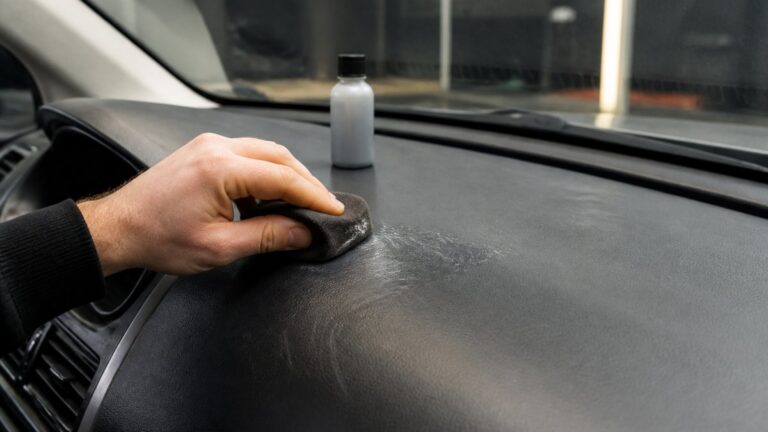
When cleaning does not shift the mark, a mild polishing compound can.
Steps:
- Apply a pea-sized amount of mild polish to a soft microfibre pad.
- Work it into the mark with light, circular pressure.
- Keep the pad moving so you do not burn through the finish.
- Wipe residue away with a clean cloth.
- Apply a protective dressing afterwards.
Best for: light surface marks and dull patches on smooth plastic.
Skip if: the panel is textured or soft-touch. Polishing flattens texture, and a flattened patch on a textured dash is very hard to hide.
Watch out: too much pressure or too coarse a compound cuts through the colour layer and leaves a permanent light spot.
Method 3: Interior dressing to disguise or tone down marks
Sometimes the honest answer is disguise rather than removal. A protective dressing evens out the finish and makes minor marks far less visible.
Steps:
- Clean the panel first and let it dry fully.
- Apply a small amount of interior dressing to a foam applicator.
- Work it into the surface in thin, even layers.
- Buff off any excess with a clean microfibre cloth.
Best for: faded panels, minor discolouration and marks on surfaces you cannot safely polish.
Skip if: the mark is deep or the dressing would sit unevenly in a scratch.
Choose a matte or satin dressing. High-shine products reflect light and actually highlight scratches, plus they attract dust.
Method 4: Heat and friction for textured plastic trim
Textured plastic trim hides scuffs well, but when a mark does show, gentle heat and friction can lift it. This is the method with the most risk, so read it fully before you start.
Steps:
- Clean and dry the area completely. Heat on trapped dirt bakes it into the texture.
- Warm the mark with a hairdryer on its lowest heat setting, keeping the nozzle moving at all times and holding it well back from the surface.
- Keep the heat gentle and brief. Plastic softens fast, and the margin between softening and melting is small.
- Gently work the warmed area with a soft cloth or your thumb, following the grain rather than rubbing across it.
- Stop the moment the mark lifts, and let the panel cool before assessing the result.
Best for: white stress marks and light scuffs on textured plastic trim.
Skip if: the panel is soft-touch, coated or leather. Heat can blister coatings and warp thin panels.
Never use a heat gun, a lighter or a hot air station on a dashboard. These reach temperatures that melt texture and warp panels within seconds, and the damage is permanent. A domestic hairdryer on its lowest setting is the only sensible tool for this job.
Safer limits and alternatives
Most practitioners find that if two short passes with a hairdryer have not shifted the mark, more heat will not help and will only add risk. Stop there. The safer alternatives are:
- Re-clean and dress: a matte interior dressing often tones down a stubborn mark enough that heat is unnecessary.
- Try friction alone: on some stress marks, firm thumb pressure along the grain works without any heat at all.
- Accept the mark or seek a professional: a textured panel that has been flattened or melted cannot be restored by DIY means, and a technician can advise on texture matching or replacement trim.
Watch out: holding heat in one spot melts texture and leaves a permanent shiny patch. If you are unsure, do not use heat at all. The same caution applies near air vents, where heat can distort surrounding trim, and near any sensor or airbag panel, where you should not work at all.
Method 5: Leather car interior scuff repair for soft-touch surfaces
Soft-touch dashboards and leather-covered panels need a different approach.
Steps:
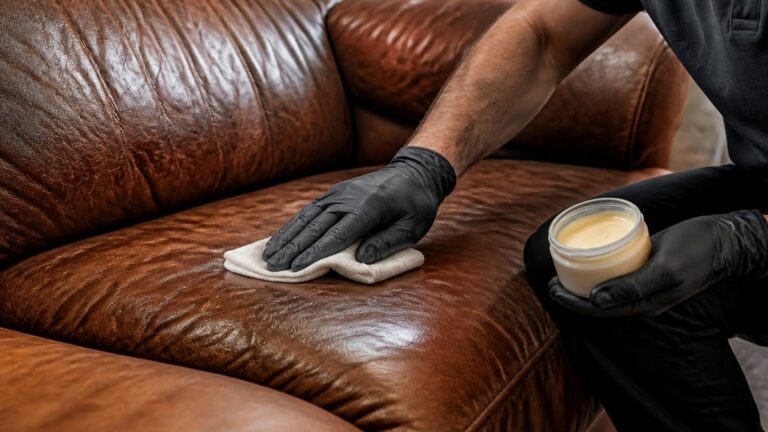
- Clean the area with a leather-safe cleaner and let it dry.
- Assess whether the coating is worn or just soiled.
- For light scuffs, use a leather-safe conditioner to restore the finish.
- For worn patches or cuts, a colour-matched repair is the reliable route.
Best for: leather-covered dashes and soft-touch panels with light wear.
Skip if: the leather is torn or the coating has worn through. DIY kits often make these worse, and a colour-matched repair is the safer choice.
If you are dealing with cuts, scrapes or wear patches, our guide on repairing cuts, scrapes and wear patches invisibly walks through how a proper repair is done.
Car dashboard scratch repair: when DIY is not enough
Some damage is past the point where a cloth and polish will help. Know where the line is.
Call in a professional if:
- The scratch catches a fingernail and shows a different colour underneath
- The texture has been flattened or melted by heat or polishing
- The panel is soft-touch, coated or leather
Professional scratch repair works differently from DIY, with a technician assessing the damage and carrying out the repair at your home. You can see how the process works in our guide to professional car interior scratch repair in seven steps.
If you are weighing up the cost against the benefit, our article on whether professional interior restoration is worth it covers the trade-offs honestly.
Frequently Asked Questions
How can I tell whether a dashboard mark is a scuff or a scratch?
Run a clean fingernail gently across the mark. If your nail catches on a groove, it is a scratch that has cut into the material. If the surface feels smooth and the mark sits on top, it is likely a scuff of transferred material from shoes, bags or rings. Scuffs usually respond to cleaning and mild polishing, while deeper scratches may need professional repair.
Can scuff marks be removed from leather car interiors?
Light scuffs on leather often lift with a dedicated leather cleaner and a soft cloth. For colour loss or deeper abrasion, a leather car interior scuff repair kit with a matched dye can help, but colour matching is tricky. Test on an inconspicuous area first, and if the finish feels rough or the colour has worn through, a professional repair gives a more even result.
What should I avoid using on a car dashboard?
Avoid abrasive household creams, wire scourers, acetone-based nail polish remover and strong all-purpose degreasers, as these can strip the finish or discolour plastic. Do not use a heat gun directly on vinyl or soft-touch coatings, and never scrub hard with a dry cloth. Stick to pH-neutral interior cleaners, a microfibre cloth and mild polishing compounds made for car interiors.
When should I get a scuffed dashboard professionally repaired?
If the mark does not lift after cleaning and a test patch of mild polish, or if the surface is textured, soft-touch or coated, DIY can make it worse. Deep scratches, colour loss and damage near airbag panels are best left to a professional. Uniqcare carries out repairs at your home across the West Midlands, so you do not need to take the car to a workshop.
Dashboard scuffs are usually fixable, but the wrong method turns a light mark into a permanent one. If your dashboard damage is beyond a cloth and a polish, we can help. Uniqcare brings over 40 years of experience to invisible repair of cuts, scrapes and wear patches, carried out at your home by fully CRB-checked technicians, so there is no workshop downtime. Get a quote from Uniqcare and get your interior looking right again.