Last Updated: November 4, 2026
Quick Summary
Choose cleaners for leather furniture by matching the product to your leather type: a pH-balanced, alkaline-free cleaner for finished and pigmented hides, and specialist aniline or suede products for uncoated leathers. Apply cleaner to a white cloth rather than the sofa, patch test a hidden area first, and always condition afterwards.
- Drop water on a hidden patch: if it beads, the leather is finished or pigmented.
- If water darkens and soaks in within a minute, treat the hide as aniline or suede.
- Apply cleaner to a white cloth, not the sofa, and wipe in gentle circles.
- Leave a patch test for ten minutes and stop if colour lifts or dulls.
- Condition sparingly after cleaning, because too much attracts dirt and darkens colour.
Table of Contents
- Why the Wrong Leather Cleaner Ruins a Sofa
- Identify Your Leather Type Before You Buy Any Cleaner
- The Best Leather Cleaner for Sofas: What to Compare
- How to Clean a Leather Sofa Without Damaging the Finish
- Leather Cleaner and Conditioner: Why You Need Both
- Leather Stain Remover: Treating Spills, Ink and Grease
- Patch Test First: Preventing Damage Before You Clean
- When Cleaning Stops Working and Restoration Is the Next Step
- Frequently Asked Questions
Why the Wrong Leather Cleaner Ruins a Sofa
Most leather sofas are not damaged by dirt. They are damaged by the wrong bottle. Cleaners for leather furniture fall into two very different groups, and choosing the wrong cleaners for leather furniture strips the finish that protects the hide.
A leather sofa is a skin, and like skin it has a surface layer that keeps it supple and sealed. Household cleaners built for kitchens and bathrooms are the usual culprit. They cut grease aggressively, and on leather that means lifting colour, drying the surface and leaving a dull, patchy finish that no amount of polishing brings back.
A sofa cleaned with a multi-surface spray can develop a chalky sheen and cracking along the seat creases. By the time it looks bad, the damage is already in the finish, not the dirt.
Below, we explain how to identify your leather, what to look for on a label, and when cleaning stops being enough.
Identify Your Leather Type Before You Buy Any Cleaner
Leather type decides which cleaner is safe. Buying before you know the type is how most damage happens, and the four families below behave so differently that a product safe on one can ruin another.
Finished (protected) leather is the most common upholstery hide. It carries a pigment coating and a protective top layer, so it tolerates a damp cloth and a mild leather cleaner. Pigmented leather sits close to finished, with a heavier surface coating that resists spills better but still needs a pH-balanced, alkaline-free formula. Aniline leather is dyed but left largely uncoated, with a natural finish that shows every mark and absorbs liquid on contact. Suede and nubuck are the fourth family: suede is the flesh side of the hide, nubuck is the outer surface sanded to a velvety nap. Both are unfinished, both absorb liquid instantly, and neither should ever see a standard liquid leather cleaner.
The quick test: drop a little water on an inconspicuous patch. If it beads and sits on the surface, the leather is finished or pigmented. If it darkens and soaks in within a minute, treat it as aniline or suede and use the gentlest product you can find, or leave it to a professional. On suede and nubuck the water will darken and spread immediately, stop there and do not apply any liquid cleaner.
Finished, Pigmented, Aniline, Suede and Nubuck: What Each One Tolerates
| Leather type | Water test result | Safe to use | Avoid |
|---|---|---|---|
| Finished | Beads on surface | Mild pH-balanced leather cleaner, damp cloth | Solvents, abrasive pads, multi-surface sprays |
| Pigmented | Slow absorption | pH-balanced leather cleaner | Alkaline cleaners, neat soap, washing-up liquid |
| Aniline | Absorbs quickly | Specialist aniline products only | Water, general cleaners, oils and conditioners that darken |
| Suede | Darkens and spreads at once | Suede brush, suede eraser, specialist foam | Any liquid cleaner, water, conditioner |
| Nubuck | Darkens and spreads at once | Nubuck brush, specialist foam | Liquid cleaners, oils, silicone protectors |
Two further checks before you buy. First, look for a care label under the seat cushion or on the frame, many British sofas state the hide type and the manufacturer’s recommended regime. Second, check the finish by feel: a finished hide feels smooth and slightly cool, aniline feels like skin with visible pores, and suede or nubuck has a nap that changes shade when you brush it with your hand.
Watch out: a cleaner labelled simply “for leather” is usually formulated for finished and pigmented hides. On aniline, suede or nubuck it can strip dye or mat the nap beyond recovery, so match the product to the family before you open the bottle.
The Best Leather Cleaner for Sofas: What to Compare
A pH-balanced, alkaline-free formula matched to your leather type, applied with a soft cloth rather than sprayed directly onto the hide, is a sensible starting point when choosing a cleaner.
Compare products on four things: formula, coverage, residue and suitability. A cleaner that leaves residue attracts fresh dirt and dulls the surface. A cleaner that promises to “restore shine” often contains oils that darken aniline leather permanently.
Side-by-Side Comparison of Cleaner Types
| Cleaner type | Best for | Strength | Watch out for |
|---|---|---|---|
| pH-balanced liquid cleaner | Finished and pigmented sofas | Everyday soiling | Needs a second wipe to remove residue |
| Foam cleaner | Textured or grained leather | Lifting dirt from creases | Over-application soaks the seams |
| Aniline-safe cleaner | Uncoated, natural-finish hides | Gentle cleaning | Limited stain removal |
| Conditioner-cleaner combo | Routine upkeep | Convenience | Weaker cleaning on heavy soiling |
How to Clean a Leather Sofa Without Damaging the Finish
Cleaning a leather sofa safely involves a few simple steps. The method matters as much as the product.
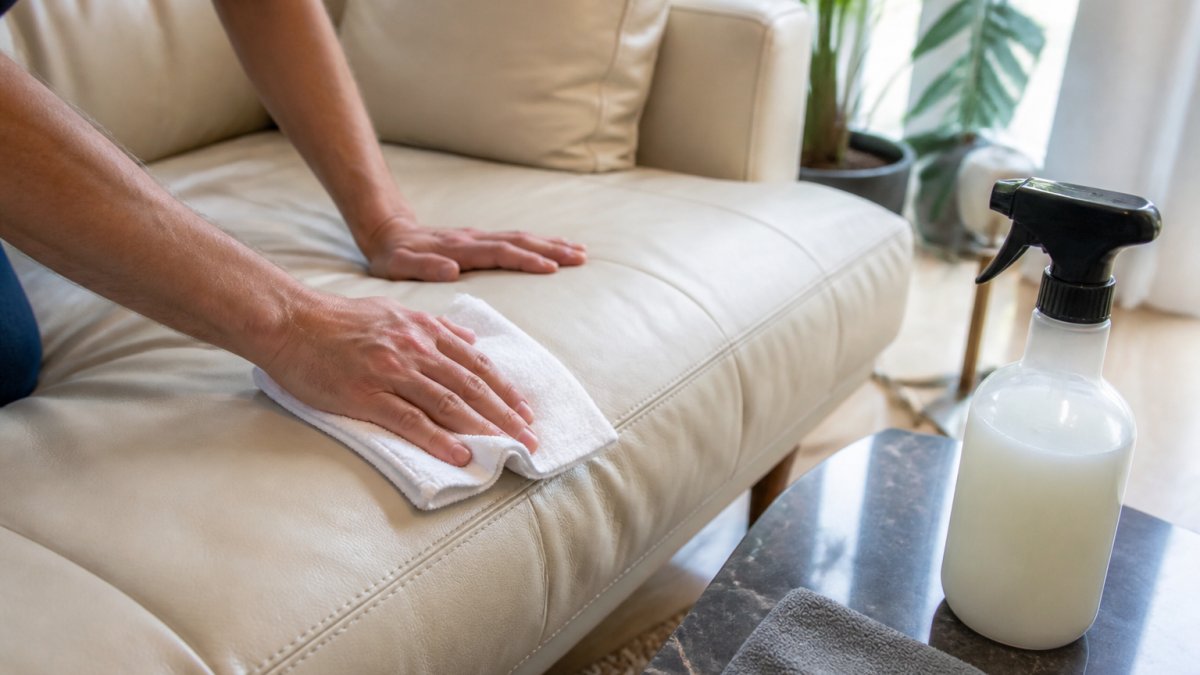
- Dust first. Run a soft dry cloth or feather brush over the whole sofa to lift surface dust. Cleaning over grit drags it into the finish.
- Test a hidden patch. Apply a small amount of cleaner to the back or underside and leave it for ten minutes. Any colour lift or dulling means stop.
- Work in sections. Apply cleaner to a white cloth, not the sofa, and wipe in gentle circles. A damp cloth lifts dirt; a wet one soaks seams.
- Dry and buff. Wipe away residue with a clean dry cloth and let the sofa air dry away from direct heat.
Leather Cleaner and Conditioner: Why You Need Both
Cleaner removes dirt. Conditioner replaces what cleaning takes out. Skipping the second step is the most common mistake we see, and it shows up as dryness and fine cracking along the seat edges within a season or two.
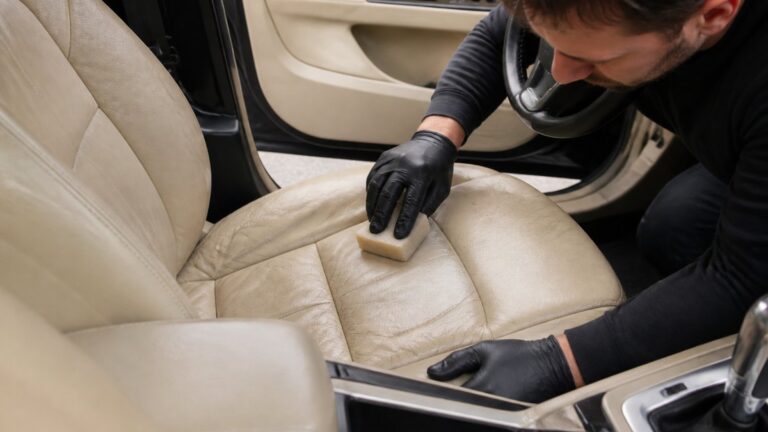
Leather loses natural oils through use, sunlight and cleaning. A conditioner restores suppleness and helps the surface resist soiling. Apply it sparingly after cleaning, work it in with a soft cloth, and buff off any excess. Too much conditioner is worse than none, because it attracts dirt and can darken the colour.
Older sofas need more thought here.
Leather Stain Remover: Treating Spills, Ink and Grease
Act fast, blot rather than rub, and never use a general-purpose stain remover on leather. That covers most spill situations, but each stain type needs its own first move and its own warning.
Liquids (drinks, water marks). Blot immediately with a dry cloth, working from the outside of the spill inwards so you do not spread it. Then wipe with a cloth barely dampened with mild leather cleaner and buff dry. Water marks on finished leather often lift if you dampen the whole panel evenly and let it dry naturally away from heat, a single wet patch dries to a ring.
Grease and oil. Lift what you can with a dry cloth, then apply a small amount of leather cleaner and buff. For a fresh grease mark, sprinkle a little cornflour or talc on the spot, leave it for several hours to draw out the oil, brush it off, then clean. Do not use washing-up liquid: it is alkaline and strips the finish.
Ink. Treat quickly with a leather-safe ink remover, testing on a hidden patch first. Rubbing spreads ink into the finish and can push it into the grain, where it becomes permanent. On aniline leather, ink usually needs a professional.
Food and dye transfer. Scoop off solids with a plastic spatula, blot the residue, then clean with a pH-balanced leather cleaner. Dye transfer from dark denim or a new cushion is common on pale finished hides; a specialist dye-transfer remover applied early works far better than repeated general cleaning.
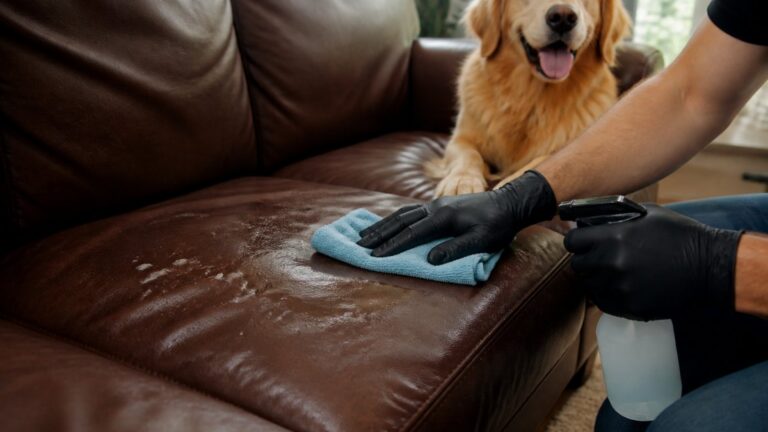
Pet accidents. These need a specific approach because of odour and residue.
Watch out: home remedies circulate widely, and many of them can damage leather if used without care. If a stain has not lifted after two gentle attempts, stop and call a specialist rather than escalating the product.
Patch Test First: Preventing Damage Before You Clean
A patch test takes ten minutes and prevents the most expensive mistakes. Apply the cleaner to a hidden area, wait, and check for colour change, tackiness or dulling before you touch the visible surface.
Where to test: the back of the sofa, the underside of a cushion, or a section hidden by a throw. Use the same cloth and dilution you plan to use on the sofa. Check the patch again after it dries, because some reactions only appear once the leather is dry.
If the patch darkens, lightens or feels sticky, stop. That reaction will repeat across the whole sofa, and reversing it usually means refinishing rather than cleaning.
When Cleaning Stops Working and Restoration Is the Next Step
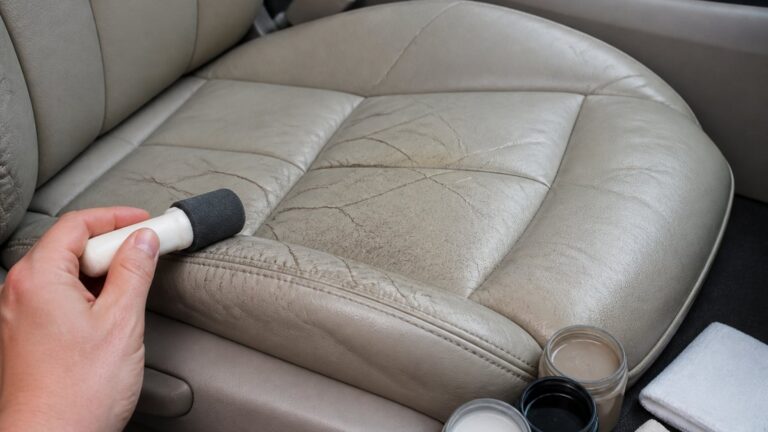
Cleaning fixes dirt. It does not fix cracked, torn or faded leather, and no cleaner will bring back a finish that has already worn through.
Signs you have moved past cleaning: cracking that opens when you press the surface, colour loss on arms and headrests, tears at the seams, or a patchy sheen that returns within days of cleaning. At that point the surface coating needs repair, not another product.
This is where we come in. At Uniqcare, we repair and restore furniture at your home, with over 40 years of experience and fully DBS-checked technicians. We cover leather, fabric and carpets. If you are weighing up repair against replacement, pricing depends on the condition and size of the job, so request a quote from Uniqcare before you commit.
Frequently Asked Questions
What is the best cleaner for leather furniture?
There is no single best leather cleaner: the right one depends on your sofa’s finish. Finished and pigmented leathers cope with a pH-balanced, alkaline-free leather cleaner applied with a damp cloth. Aniline and unfinished leathers need a gentler, fragrance-free product and far less moisture. Check the care label or test a hidden patch first, and avoid anything containing solvents, bleach or abrasives, which strip colour and leave patchy results.
Can you use washing-up liquid to clean leather?
Washing-up liquid is too alkaline for regular use on leather. It can lift dirt, but repeated use strips the protective finish and leaves the surface dry and prone to cracking. If you are stuck, a heavily diluted drop on a damp cloth is a one-off emergency measure, not a routine. A dedicated leather cleaner and conditioner keeps the finish intact and is the safer long-term choice for upholstery.
How often should you clean and condition a leather sofa?
Dust and wipe the surface weekly with a soft dry cloth or feather brush. Deep clean with a leather cleaner every three to six months, and condition straight after to restore suppleness. High-traffic households, homes with pets, or sofas near radiators may need cleaning every two to three months. Condition whenever the leather starts to feel dry or looks dull, rather than sticking rigidly to a calendar.
How do you remove stains from leather furniture?
Blot spills immediately with a clean dry cloth, working from the outside in. For grease, use a leather stain remover designed for the job or a small amount of pH-balanced cleaner on a white cloth, then wipe away residue. Ink and dye transfer need a targeted stain remover and a patch test first. If a stain has set, or the finish has worn through, professional restoration is safer than repeated DIY attempts that can spread the mark.
If your sofa has gone past cleaning and you want an honest view of whether it can be saved, get a quote from Uniqcare. We will tell you what is repairable, match the finish so the repair disappears into the sofa, and carry out the work at your home with minimum fuss. Get started with Uniqcare and restore the comfort and look of your furniture without buying new.