Last Updated: November 21, 2026
Quick Summary
Yes, in most cases a professional can match colour closely enough that a repair is hard to see, but no provider can promise a perfect match on every piece. Whether can professional leather repair match colour for your item depends on the leather type, its age, how much it has faded, and whether a physical sample is available.
- Pigmented leather usually gives the closest match, while aniline is the hardest because absorbency varies.
- A physical leather sample is more reliable than a photograph, since screens and camera light distort colour.
- Always request a test patch on an inconspicuous area and judge it only once fully dry.
- Assess the match under at least two lighting conditions, ideally in the room where the item sits.
- Ask providers to state exactly what their guarantee covers and what it excludes.
Table of Contents
- Can a Professional Really Match the Colour of Your Leather?
- How Colour Matching Works in Leather Repair
- Step-by-Step: How to Match Leather Dye for a Repair
- Leather Colour Restoration: Faded Surfaces, Scuffs and Scratches
- Leather Sofa Recolouring Versus Spot Repair: Which Do You Need?
- What Affects the Result: Leather Type, Finish and Lighting
- Booking a Leather Colour Matching Service in the West Midlands
- Frequently Asked Questions
Can a Professional Really Match the Colour of Your Leather?
Yes, in most cases a professional can match the colour of your leather closely enough that the repair is hard to see, but no one can promise a perfect match on every piece, so ask whether professional leather repair can match colour for your specific item before you book. The answer depends on the leather, its age, and how much it has faded.
A match is rarely about finding one exact dye. Leather that has been in sunlight for years has changed colour across its surface, so a technician usually blends several shades to reproduce the original. Most of the work happens before any paint touches the leather, because whether professional leather repair can match colour depends largely on the testing and comparison carried out first. Testing and comparison come first, because a mismatch on a small test patch is far cheaper to fix than one on the sofa arm.
Uniqcare’s technicians are fully DBS checked and carry out repairs at your home, so you do not need to move the item or lose the room while the work is done.
How Colour Matching Works in Leather Repair
Colour matching is the process of reproducing the existing colour of a leather surface so that a repaired area blends into the surrounding leather. It combines a physical sample, a set of leather dyes or repair paints, and a trained eye.
The process starts with the colour already on the piece. A technician looks at the leather under daylight and compares it with the chosen colour, if you are recolouring the whole item rather than repairing a single patch. Leather rarely has one uniform shade, so the match is built from a core colour palette that is adjusted until it sits naturally against the existing leather.
Matching Colour from a Physical Leather Sample
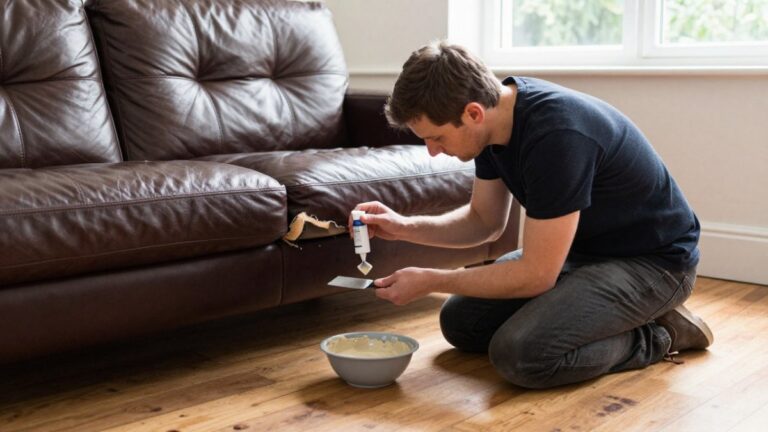
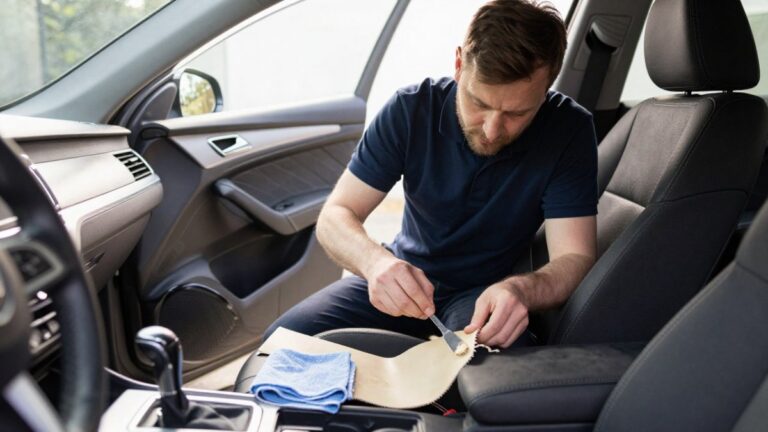
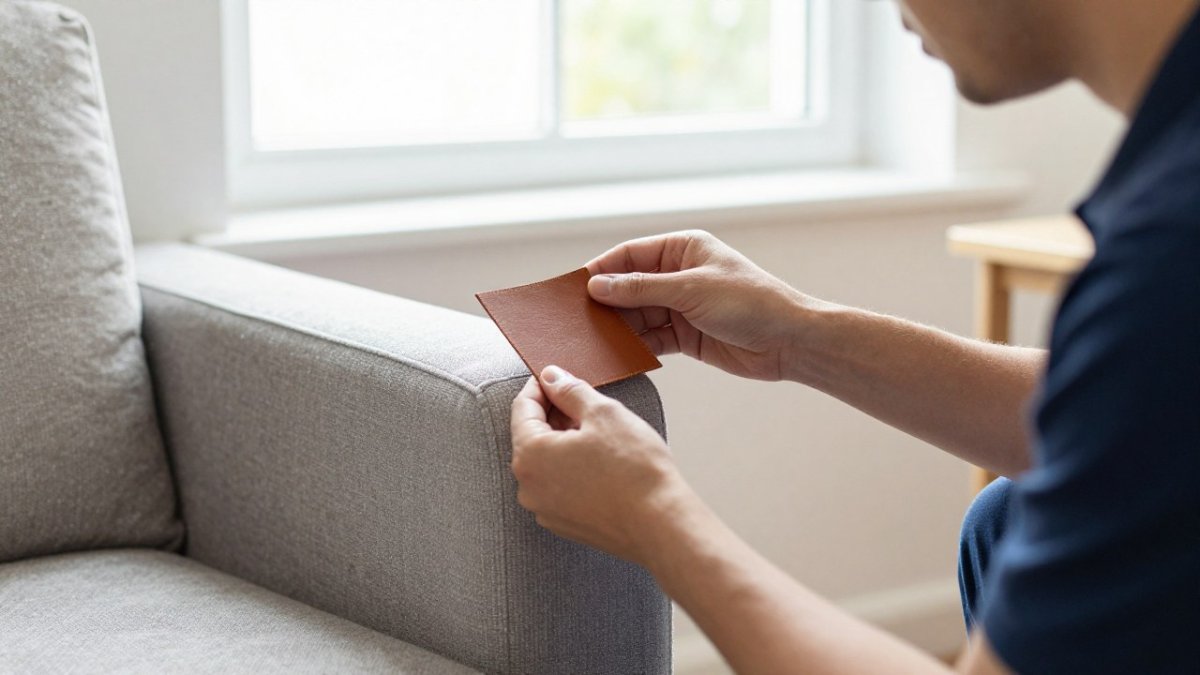
A physical sample is the most reliable starting point. Where possible, a small offcut or a hidden area of the leather gives the technician something to compare directly, rather than relying on a photograph. Photos vary with screen settings and camera light, so a real piece of leather is far more accurate.
If you cannot supply a sample, the technician will work from the surface itself. This is workable, but it usually takes more test rounds. Always ask for a test patch on an inconspicuous area before the full repair goes ahead.
Hand-Mixed Matching Versus Machine Matching
Machine colour matching uses a device to measure the colour and suggest a formula. It is quicker and gives a consistent starting point, but it does not account for grain, sheen or fading. In practice, the best results usually combine both: the machine gives a baseline and the technician refines it by eye.
Step-by-Step: How to Match Leather Dye for a Repair
This is the general process a technician follows. It is useful to understand it so you know what a proper repair should involve.
- Clean the area. Remove dirt, oils and old conditioner from the leather surface. Dye does not bond well to a dirty surface.
- Assess the damage. Identify whether the problem is a surface scuff, a scratch, a faded patch or a deeper cut. Each needs a different approach.
- Compare the colour. Check the existing leather under daylight against your sample or the surrounding area.
- Mix the base shade. Build the core colour from leather dyes or repair paints, then adjust it in small steps.
- Test the match. Apply a test patch to an inconspicuous area and let it dry fully before judging it.
- Adjust as needed. Dark leather often needs a slightly lighter test than the final shade, because the colour deepens as it dries.
- Apply in thin layers. Several light coats look more natural than one heavy coat, which can look flat or shiny.
- Seal and condition. Finish with a suitable topcoat so the repair resists wear and matches the surface sheen.
The general process a technician follows is set out below, so you can see what a proper colour match should involve.
| Step | What to do | Note |
|---|---|---|
| Clean the area | Remove dirt, oils and old conditioner | Dye does not bond to a dirty surface |
| Assess the damage | Identify scuff, scratch, fading or cut | Each needs a different approach |
| Compare the colour | Check existing leather under daylight | Compare against sample or surrounding area |
| Mix the base shade | Build core colour, adjust in small steps | Adjust gradually |
| Test the match | Apply to an inconspicuous area and let dry | Judge only once fully dry |
| Adjust as needed | Lighten test shade for dark leather | Colour deepens as it dries |
| Apply in thin layers | Several light coats, not one heavy coat | Heavy coats look flat or shiny |
| Seal and condition | Finish with a suitable topcoat | Matches surface sheen |
Leather Colour Restoration: Faded Surfaces, Scuffs and Scratches
Colour restoration is different from a simple repair. Faded leather needs the whole affected area brought back to a consistent tone, while a scuff or scratch needs only a localised blend. Many repairs that look poor have been attempted with a single shade applied to a faded surface, which leaves a patch that stands out.
Scuffs and scratches are generally easier to hide than fading, because the surrounding leather still carries the original colour. Wear patches on arms and seat edges are often the hardest to match, because they receive constant contact and the surface finish has changed.
Leather Sofa Recolouring Versus Spot Repair: Which Do You Need?
Spot repair fixes one damaged area, such as a scuff on a cushion or a small tear. Recolouring changes the colour across the whole piece, usually because the leather has faded evenly or you want a different shade.
Choose spot repair when the damage is confined to one part and the rest of the sofa is in good condition. Choose recolouring when fading or wear is spread across the piece, because a single patch will otherwise look out of place. Pricing depends on the size of the item, the extent of the damage and the work involved, so please contact Uniqcare for a quote.
What Affects the Result: Leather Type, Finish and Lighting
Several factors decide how close a match can be, and understanding them is what separates a realistic expectation from a disappointing one. The colour itself is only part of the job.
Leather type changes how colour sits on the surface
Aniline leather is dyed through and has little or no surface coating, so colour sits within the hide and the grain shows through. A repair on aniline has to be absorbed rather than painted on, and the same shade will read darker or lighter depending on how much the hide drinks in. Semi-aniline leather has a thin protective coating over a dyed surface, so it takes colour more predictably but still shows grain and natural variation. Pigmented leather has a coloured coating on top, which is the most forgiving surface for a match because the technician is matching a coating rather than raw hide.
A common pattern is that pigmented leather gives the closest match, semi-aniline is close but needs more test rounds, and aniline is the hardest because absorbency varies across the hide and even within a single cushion.
Finish matters as much as shade
A matt, satin or glossy finish each reflects light in its own way. A repair that matches the colour but not the sheen will still look wrong, particularly on a sofa arm where light falls at an angle. The topcoat is what controls sheen, so the technician adjusts the finish as well as the pigment. Grain texture is the other half of the job: a filled and levelled repair on a heavily grained hide can look too smooth even when the colour is right, so grain is reintroduced before the topcoat goes on.
Lighting is where most matches are judged, and where most go wrong
A repair can look perfect in a bright workshop and different at home under warm lamps or evening light. Daylight, warm indoor light and cool LED light each shift how a colour reads, and leather with a sheen will change more than matt leather because the reflection moves as you walk past. The practical answer is to assess a test patch in the room where the item sits, at the times of day you actually use it, rather than relying on a single viewing. Most practitioners will check a sample under at least two lighting conditions before signing off a repair.
What a colour-match guarantee can and cannot cover
A realistic guarantee covers the technician’s workmanship: that the pigment was mixed to the sample supplied, applied correctly, and that the repair is sound. It cannot promise an invisible result on every piece, because lighting, wear, texture and the surrounding leather all affect what the eye sees. Uneven fading, previous treatments and contamination from cleaners or conditioners can all pull a match off, and no guarantee can undo what is already in the leather. Ask any provider to state plainly what is covered, workmanship, adhesion and colour against the agreed sample, and what is excluded, such as pre-existing damage or a match judged under lighting the sample was never assessed in.
Watch out: a guarantee that promises a perfect match on every piece is a warning sign, not a reassurance, because no technician can control how aged leather reads in every room.
Booking a Leather Colour Matching Service in the West Midlands
Uniqcare provides furniture and vehicle interior repair across the West Midlands, and repairs are carried out at your home. This means you do not need to move a sofa or take a car to a workshop.
Before you book, it helps to have a few things ready:
- A photograph of the damaged area and the whole item
- A physical sample of the leather if you have one
- Details of the leather type, if known
- A note of where the item sits, such as in strong sunlight, since this affects fading
If you are based in the West Midlands and want to know whether a match is realistic for your piece, contact Uniqcare for an assessment.
Get a Quote from Uniqcare to see whether your leather can be matched, with over 40 years of experience and CRB checked technicians coming to your home.
Frequently Asked Questions
Can a professional match the colour of leather?
In most cases, yes. A skilled technician can get a close colour match, particularly where the leather is a standard finish and a physical sample or the original colour can be assessed. Results depend on the leather type, how much the surface has faded or aged, and the lighting the match is judged under.
How accurate is professional leather colour matching?
Accuracy varies. Close matches are routinely achieved on well-kept, consistent leather, but faded or heavily worn surfaces are harder because the original colour has changed. Colour can look different under daylight, lamp light and in a car, so a match should be checked in the conditions where the item is used.
How long does leather colour restoration take?
Timing depends on the size and number of repairs, the leather type and whether the colour needs to be mixed and tested first. Repairs are carried out at your home, so you do not need to take the item to a workshop.
Is it better to repair or recolour a leather sofa?
Spot repair suits localised damage such as scuffs, scratches or a small worn patch on the arm. Recolouring the whole piece makes more sense when the colour has faded evenly across the sofa or you want a different shade. Pricing depends on the size of the item, the extent of the damage and the work involved, so request a quote from Uniqcare for current prices.