Table of Contents
- What Drives the Cost of Sofa Leather Restoration
- Leather Sofa Repair Cost: What to Expect
- DIY Leather Restoration Kit vs Professional
- The Restoration Process: What Happens on the Day
- Leather Furniture Maintenance Tips to Avoid Repeat Costs
- Is It Worth Restoring an Old Leather Sofa?
- Conclusion
- Frequently Asked Questions
Last Updated: October 4, 2026
What Drives the Cost of Sofa Leather Restoration
Working out the cost of sofa leather restoration starts with one honest truth: no reputable specialist quotes blind. The price is built from the damage itself, the leather it sits in, and how easily a technician can reach it. At Uniqcare, we have spent over 40 years assessing worn sofas across the West Midlands, and these factors decide almost every quote we give.
A small scuff on a cushion and a split seam across a three-seater are not the same job, even when they look similar in a photo. Colour matching adds its own layer of difficulty, because leather fades unevenly and a patch that looks right in daylight can look wrong under a lamp. Access matters too: a sofa against a wall in a tight hallway takes longer to work on than one in an open room.
Understanding these drivers is the fastest way to predict your own quote before anyone visits.
Damage Type and Size
Surface scuffs and light scratches sit at the cheaper end of the scale. They need cleaning, colour and a sealing coat, and many can be handled in a single visit.
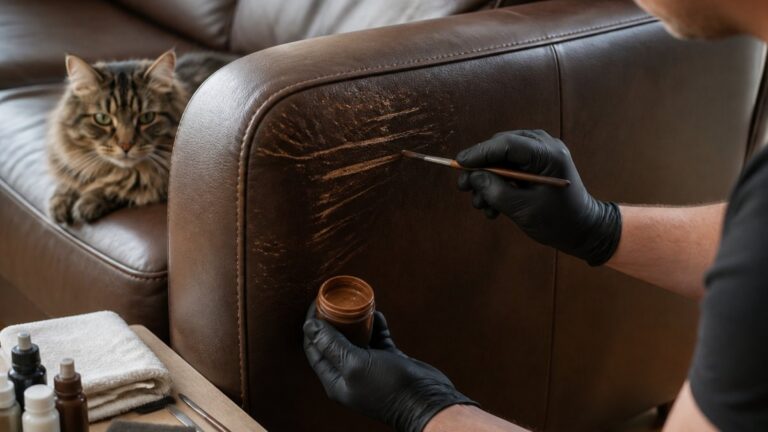
Cuts, tears and cat scratches are a different proposition. These need filling, rebuilding of the surface grain, then colour and finish, which takes more time and more skill.
Wear patches on arms and headrests fall somewhere between the two. They cover a larger area but are usually shallower than a tear.
Photograph the damage in daylight, from about a metre back, and include something for scale like a coin. A technician can often give a far more accurate estimate from a clear photo than from a description over the phone.
Leather Type and Colour Matching
Not all leather behaves the same way. Aniline and semi-aniline leathers, which have little or no surface coating, absorb colour differently from pigmented and protected leathers. That changes both the technique and the time required.
Colour matching is where experience shows. Leather darkens and lightens with sun exposure and body oils, so the original factory colour is rarely the right match for a faded panel. A skilled technician blends pigment to the current tone of the sofa, not the colour it left the factory with.
According to guidance from the Furniture Industry Research Association on leather care, leather type and finish determine which cleaning and restoration products are safe to use, which is why a one-size-fits-all approach so often goes wrong.
Access and Location
A sofa in a ground-floor living room with space around it is quick to work on. The same sofa wedged into a first-floor flat with a narrow stairwell takes longer, and that time is reflected in the quote.
Most professional restoration is carried out at your home rather than in a workshop, which avoids removal and delivery costs. Confined spaces, tight corners and fragile upholstery all add handling time.
Leather Sofa Repair Cost: What to Expect
There is no single figure for leather sofa repair cost, and any provider quoting one without seeing your sofa is guessing. Pricing depends on the size of the damaged area, the number of separate repairs, the leather type, and how much colour matching is required.
A single small scuff on one cushion is a very different job from restoring four worn arms and a torn seam across a three-seater. The more individual areas that need attention, the more time the work takes, and time is the main cost driver in any restoration service.
| What Affects the Quote | Why It Matters | Typical Impact |
|---|---|---|
| Number of damaged areas | More areas mean more prep and drying time | Higher |
| Size of each area | Larger patches need more filler and colour | Higher |
| Leather type | Aniline leathers need more careful colour work | Higher |
| Colour matching difficulty | Faded or uneven panels take longer to blend | Higher |
| Access and location | Tight spaces and upper floors add handling time | Higher |
| Single visit vs return visit | Some finishes need a second trip to cure | Higher |
The honest answer is that you should expect a proper assessment before any figure is given. Uniqcare provides quotes after seeing the furniture, not before.
DIY Leather Restoration Kit vs Professional
A DIY leather restoration kit costs far less upfront than professional work, and for a tiny scuff on a modern protected leather, a kit can be a reasonable first attempt. The problem is what happens when it goes wrong.
Most kits supply a limited range of colours and a single filler consistency. On a faded panel, that mismatch shows immediately. On a deep tear, a filler that is too soft will crack again within weeks, and a filler that is too hard will feel wrong underhand and can lift at the edges. Once a poor repair has cured, removing it cleanly takes longer than the original job would have.
Professional restoration differs in three ways: colour is mixed to your sofa rather than picked from a chart, the filler is chosen to match the flexibility of your leather, and the finish is sealed so it wears like the rest of the sofa.
Attempting a DIY repair on a deep tear or a large worn patch often makes the damage worse. The cured filler has to be stripped back before a proper repair can begin, which adds cost rather than saving it.
The Restoration Process: What Happens on the Day
Most leather sofa restoration is completed at your home in a single visit, with no need to move the furniture. Here is how a typical appointment runs.
First, the technician cleans the damaged area and the surrounding panel so the new colour blends into clean leather. Skipping this step is the most common reason DIY repairs look patchy.
Next comes filling. For a tear or a deep scratch, a flexible filler rebuilds the surface level with the surrounding leather. Once cured, the grain is retextured so the repair does not sit proud of the surface.
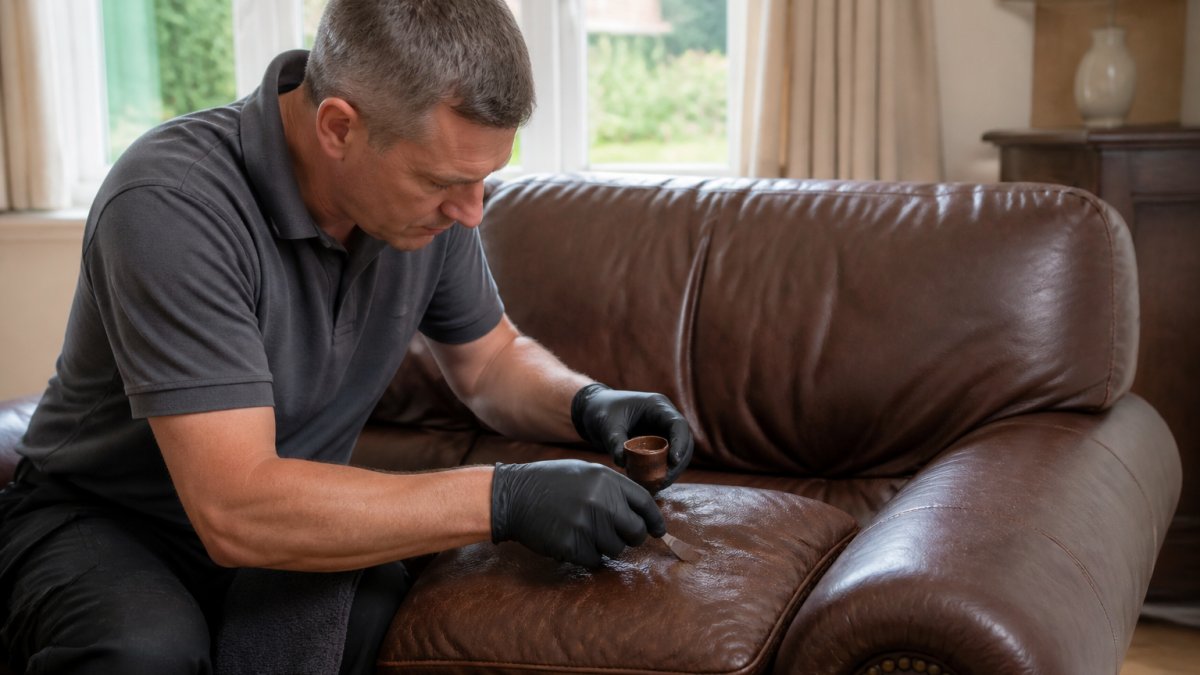
Colour is then applied in thin layers, building up to match the tone of the panel rather than the factory colour. A protective sealant goes on last, and the sofa is ready to use once it has cured.
Total time: typically one to three hours for a single repair, longer for multiple areas.
What you’ll need: nothing. The technician brings all equipment and materials.
Leather Furniture Maintenance Tips to Avoid Repeat Costs
Regular care is the cheapest form of restoration. A few simple habits keep leather supple and slow the wear that leads to costly repairs.
- Dust and vacuum leather weekly with a soft brush attachment to stop grit grinding into the surface.
- Wipe spills immediately with a dry cloth, then a barely damp one. Never soak the leather.
- Keep sofas out of direct sunlight where possible, as UV fades leather unevenly.
- Condition protected leather a few times a year to stop it drying and cracking.
- Keep pets’ claws trimmed, and place a throw over the seat your pet favours.
The NHS guidance on household cleaning products and skin contact is a useful reminder that harsh chemicals can irritate skin, and the same chemicals strip the finish from leather. Mild is almost always better.
Most repeat restoration costs come from the same three causes: sun fade, dried-out leather, and untreated scratches that deepen over time. Ten minutes of care a month prevents all three.
Is It Worth Restoring an Old Leather Sofa?
For most good-quality sofas, restoration costs a fraction of replacement and keeps a piece you already know and like. A well-made leather sofa with a solid frame is worth restoring even when the surface looks tired.
The calculation changes with the frame. If the frame is sound and the leather is simply worn, restoration is almost always the better value. If the frame is broken, the springs have gone, or the leather is splitting across multiple panels, replacement may be the more sensible route, and we will tell you so.
There is also the question of character. Older leather develops a patina that new furniture cannot replicate, and restoration preserves it rather than replacing it. For antique and vintage pieces, that matters as much as the money.
Homeowners with a structurally sound leather sofa showing surface wear, fading or isolated damage who want to keep the piece rather than replace it.
Conclusion
The real challenge with sofa leather restoration is that the cost is invisible until someone qualified looks at the damage, and cheap guesses usually turn into expensive corrections. Uniqcare brings over 40 years of experience, fully DBS checked technicians, and repairs carried out at your home, so you get an honest assessment and an invisible repair without moving your furniture. Our cost-effective approach covers leather, fabric and carpets, from a single scuff to a full worn sofa. Get a quote from Uniqcare.
Frequently Asked Questions
Is it worth restoring an old leather sofa?
It often is, especially if the frame and cushions are sound. Restoration costs less than a new sofa and keeps a piece you already know fits your space. A professional can match colour and texture so repairs blend in. If the frame is broken or the leather is torn across large areas, replacement may be better. Ask for a quote first.
How much does it cost to have a leather sofa professionally cleaned and restored?
The cost of sofa leather restoration depends on the number of damaged areas, the type of leather, and whether the work is done at your home. Cleaning alone is cheaper than repairing cracks or tears. Because every sofa is different, providers assess first and quote based on what they find. Request a quote for an accurate figure.
What factors influence the price of leather furniture repair?
Key factors include the size and number of damaged patches, the type of leather (aniline, semi-aniline, or pigmented), and whether colour matching is needed. Access matters too: a sofa in a tight corner takes longer. Travel to your home and the technician’s time also affect the total. These variables explain why prices vary between jobs.
Can a cracked leather sofa be fully restored?
Yes, in most cases. Cracks and surface splits can be filled, recoloured, and sealed so they are barely visible. The repair is strongest when the leather around the crack is still supple. If the leather has dried out completely and is crumbling, restoration may be limited. A technician can tell you what is achievable after inspecting the sofa.