Quick Summary
To remove ink stains from leather, blot fresh marks gently with a dry white cloth, then use a lightly dampened cloth and a leather-safe cleaner, always testing a hidden area first. Avoid harsh solvents such as rubbing alcohol, acetone and WD-40, which can strip colour and damage the finish. For aniline, suede or set-in stains, call a professional instead.
- Identify your leather type and finish before attempting any cleaning method.
- Always test your cleaner on a hidden area and wait at least ten minutes.
- Dab the stain gently from the outside inwards; never scrub hard.
- Avoid rubbing alcohol, acetone and WD-40, which can strip colour and finish.
- Book a professional if ink has set in or the leather is aniline or delicate.
Table of Contents
- How to Remove Ink Stains from Leather?
- Identify Your Leather Type and Finish Before You Start
- A Safe Decision Guide for Choosing a Removal Method
- How to Remove Biro from Leather Step by Step
- Using a Leather Ink Remover and Other Cleaning Supplies
- Can Rubbing Alcohol Damage Leather?
- How to Clean and Condition Leather After Stain Removal
- When to Book a Professional Leather Repair
- Frequently Asked Questions
How to Remove Ink Stains from Leather Safely
Uniqcare restores furniture and car interiors across the West Midlands, and ink marks are one of the problems people ask about. Biro and other ballpoint stains can look alarming on a sofa arm or a car seat, but many can be lifted with care. The key is to act carefully, use the gentlest method first, and know when to stop and call a professional. Below, we explain how to remove ink stains from leather safely, what to avoid, and when a repair is the better choice.
Last Updated: November 26, 2026
How to Remove Ink Stains from Leather?
Ink stains can often be lifted from leather with a gentle, step-by-step approach, but the right method depends on the leather type, the finish and how long the mark has been there. Always start with the mildest option and test it on a hidden area first.
Quick answer: Remove fresh ink by blotting gently with a lightly dampened cloth and a leather-safe cleaner. Avoid harsh solvents, which can strip colour and damage the finish.
Identify Your Leather Type and Finish Before You Start
Before you clean anything, check what kind of leather you have. Aniline, semi-aniline and pigmented leathers all react differently to cleaning products, and some finishes are far more fragile than others.
How to tell the main leather types apart
- Pigmented or protected leather: The surface is smooth and usually has a visible sheen or a slight plastic-like feel. A drop of water placed on an inconspicuous area will sit on the surface rather than soak in. This is the most common finish on sofas, car seats and office chairs, and it is the most tolerant of gentle cleaning.
- Aniline leather: The surface is soft, matte and shows natural grain, scars and colour variation. A water drop darkens the leather almost immediately because there is no protective topcoat. Ink soaks in quickly and solvents can lift the dye, so treat aniline as a professional-only material for ink removal.
- Semi-aniline leather: A middle ground. The leather is dyed through but has a thin protective coat, so it looks natural but resists water for a few seconds. It is more forgiving than pure aniline but still vulnerable to strong solvents.
- Suede and nubuck: These are buffed or sanded surfaces with a raised nap. Liquid cleaners will flatten the nap and leave a dark ring, and ink wicks along the fibres. Do not use any of the wet methods in this guide; seek a specialist.
- Faux or bonded leather: A polyurethane or PVC coating over a fibre backing. Solvents can dissolve the coating or lift it from the backing, leaving a permanent blister. Test only on a hidden area and stop at the first sign of tackiness.
The hidden-area test is not optional
When to stop before you start
If the leather is aniline, suede, nubuck or bonded, or if you cannot identify the finish with confidence, do not proceed with household remedies. Many specialists will identify the leather type as part of a quote.
Watch out: a finish that feels slightly sticky or looks shinier than the surrounding area may already have been damaged by a previous cleaning attempt, and further cleaning will make it worse rather than better.
A Safe Decision Guide for Choosing a Removal Method
Choosing the right method saves time and protects the leather. Use this simple guide:
- Is the stain fresh? If yes, blot gently with a dry cloth first, then try a mild leather cleaner.
- Is the stain old or set in? If yes, a gentle cleaner may only partly lift it. Stronger methods carry more risk.
- Is the leather delicate or aniline? If yes, avoid solvents and call a professional.
- Is the leather valuable or a car interior? If yes, a professional repair is often the safer choice.
When in doubt, stop and get advice rather than risking permanent damage.
How to Remove Biro from Leather Step by Step
Biro is one of the most common ink marks we see. Follow these steps for a careful, controlled clean.
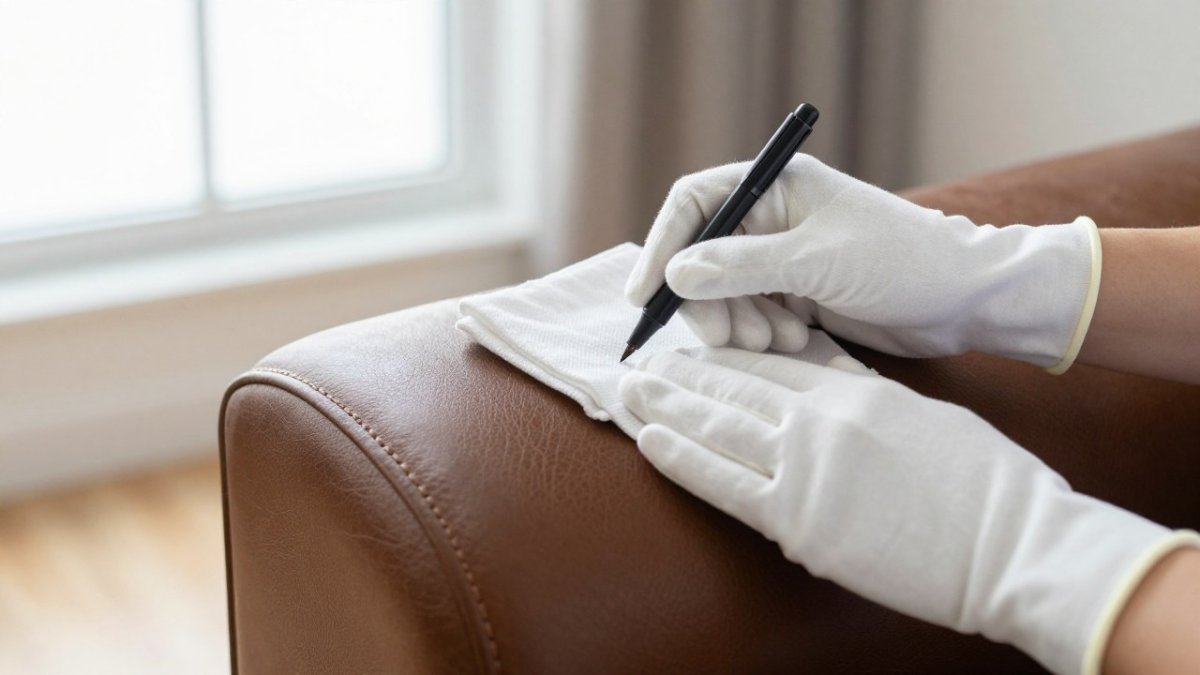
- Blot the excess. Use a dry white cloth to lift any wet ink. Dab, never rub, so the ink does not spread.
- Test a hidden area. Choose a spot underneath a cushion or on the back of a seat and test your cleaner there first. Wait a few minutes and check for colour transfer.
- Apply a small amount of cleaner. Dampen a soft cloth lightly with a leather-safe cleaner. Do not soak the leather.
- Dab the stain gently. Work from the outside of the mark inwards to stop it spreading.
- Check progress. Blot with a clean dry cloth after each dab. Stop if the colour starts to lift from the leather.
- Dry naturally. Leave the area to air dry away from direct heat.
Watch out: Never scrub hard. Rubbing can wear the finish and push the ink deeper into the grain.
Fresh Ink Versus Set-In Stains
Fresh ink is far easier to lift than a mark that has dried over weeks or months. Fresh stains often respond to a single careful clean, while set-in stains may need several gentle passes or a professional. Some marks may fade rather than disappear completely. If a set-in stain does not improve after two careful attempts, stop and seek help.
The steps below summarise the main actions for lifting biro from leather, with the timing or frequency given in the article.
| Step | What to do | Time or frequency |
|---|---|---|
| Blot the excess | Dab wet ink with a dry white cloth | Immediately |
| Test a hidden area | Apply cleaner to an unseen spot | A few minutes |
| Apply cleaner | Lightly dampen a soft cloth, do not soak | Small amount |
| Dab the stain | Work from outside of mark inwards | Gently, repeatedly |
| Check progress | Blot with a clean dry cloth | After each dab |
| Dry naturally | Air dry away from direct heat | Until dry |
Using a Leather Ink Remover and Other Cleaning Supplies
A purpose-made leather ink remover is usually the safest option because it is formulated for leather. Other supplies you may need include a soft cloth, cotton buds for small areas, and a leather conditioner for aftercare.
Read the label, follow the instructions and test every product first. Our guide to cleaners that won’t cause damage explains which products are safe for leather furniture. Avoid general household cleaners, which can dry out or discolour leather. Specialist leather cleaners are available from a range of retailers.
Can Rubbing Alcohol Damage Leather?
Yes, rubbing alcohol can damage leather. It is a strong solvent that dissolves the oils and waxes in the finish and can strip the protective topcoat, lighten the colour and leave a dry, cracked surface.
Why household remedies are riskier than they look
- Hairspray: Often recommended online because the alcohol content can soften ink, but hairspray also contains polymers and perfumes that leave a sticky residue. That residue attracts dirt and can react with the leather finish, and the propellant can chill and crack a cold surface.
- Acetone (nail varnish remover): Far too aggressive for leather. It will remove ink and the finish together, and on pigmented leather it can take the colour down to the raw hide in seconds.
- WD-40: A penetrating oil that can spread the ink sideways through the grain and leave an oily stain that is harder to remove than the original mark. It also darkens aniline leather permanently.
- Untested alcohol or hand sanitiser: Concentration varies wildly between products, so a method that worked for one person may strip the finish for another. Hand sanitiser also contains moisturisers and thickeners that leave a film.
- Nail polish remover labelled ‘acetone-free’: Usually ethyl acetate or another solvent, which is just as aggressive to leather finishes.
A safer order of attempts
Start with a dry white cloth to lift wet ink, then a purpose-made leather cleaner, then a dedicated leather ink remover.
When to stop rather than escalate
If two careful attempts with a leather-safe product have not shifted the mark, the ink has likely bonded with the finish or soaked into the grain. Escalating to a stronger solvent at that point risks more damage than the stain itself. A professional can assess whether the mark can be lifted, dyed over or refinished.
Watch out: never combine remedies. Mixing alcohol, acetone or oil-based products on the same area can create a reaction that is far harder to reverse than any single product used alone.
How to Clean and Condition Leather After Stain Removal
Once the stain is gone, aftercare helps restore the leather’s softness and protect it from future marks.
- Clean the area gently to remove any cleaner residue.
- Let the leather dry fully before conditioning.
- Apply a small amount of leather conditioner with a soft cloth.
- Buff lightly to even out the finish.
- Repeat occasionally to keep the leather supple.
Regular conditioning helps prevent cracking and makes future stains easier to remove.
When to Book a Professional Leather Repair
Some stains are best left to specialists. Book a professional repair if the ink has set in, if the leather is aniline or delicate, or if the colour has started to lift after cleaning. If the damage is beyond home repair, our guide to leather sofa colour matching services explains what a professional can do to match the colour.
Uniqcare provides repairs at your home across the West Midlands, with fully DBS-checked technicians and over 40 years of experience. Pricing depends on the size of the damage, the leather type and the job, so we recommend contacting us for a quote. Visit our website to get a quote and find out how we can help restore your leather safely.
Frequently Asked Questions
How do you remove ink stains from leather?
Start by identifying your leather type and finish, then test any cleaner in an inconspicuous area. For fresh marks, blot gently with a dry cloth rather than rubbing, which spreads the ink. Apply a small amount of a suitable leather ink remover or a mild cleaner on a cotton bud or soft cloth, work from the outside of the stain inwards, and wipe away residue with a clean damp cloth. Leave the area to dry naturally, then condition the leather. Older or set-in stains may need several gentle passes or a professional cleaner, and some marks will not lift completely.
Can you use rubbing alcohol to remove pen ink from leather?
Rubbing alcohol can lift some ink from some leather finishes, but it is not safe for every item. It can strip colour, dull the finish or dry out the leather, particularly on aniline or delicate surfaces. Always test on a hidden area first, dampen a cotton bud rather than soaking the surface, and work quickly. If the colour starts to lift or the surface looks changed, stop immediately. A leather-specific ink remover is usually the safer first choice.
How do you get biro marks off a leather sofa?
Begin with the gentlest method. Blot fresh biro marks with a dry cloth, then dab a small amount of leather cleaner onto a cloth and work gently in small circles. Avoid soaking the sofa, and check the cushion or back section for a hidden spot before treating the visible area. Once the mark has lifted, wipe clean, allow the leather to dry naturally, and condition it. If the mark has set into the grain or the colour looks damaged, a professional repair may be a better option.
When should you call a professional for leather ink stains?
Consider professional help if the stain is large, has been set for a long time, or is on a valuable or heavily worn item such as a car seat or antique piece. It is also sensible if the leather is delicate, the finish is unknown, or previous home treatments have started to damage the colour. Uniqcare offers repairs carried out at your home in the West Midlands, and you can contact the team for a quote on your specific item.