Table of Contents
- Act Fast: Why Pet Stains on Leather Need Immediate Attention
- What You’ll Need Before You Start
- Step-by-Step: How to Remove Dog Urine from Leather Upholstery
- How to Get Urine Smell Out of a Leather Sofa
- Cleaning Dried Pet Stains from Leather
- Choosing a Leather Cleaner for Pet Stains
- Common Mistakes to Avoid
- When to Call a Professional
- Frequently Asked Questions
Last Updated: 17 October 2026
Act Fast: Why Pet Stains on Leather Need Immediate Attention
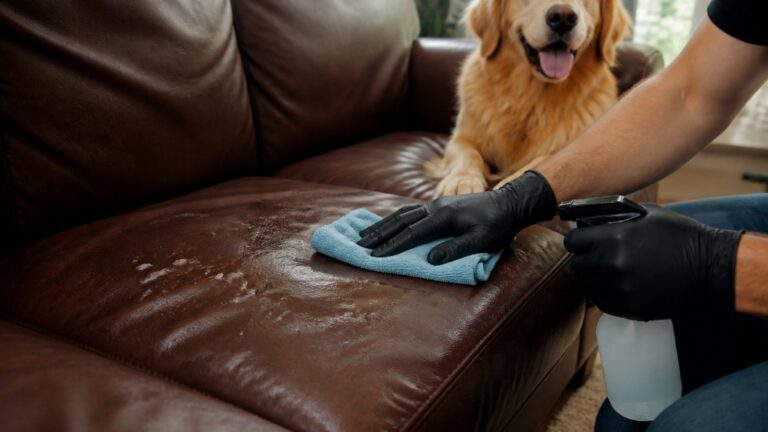
Pet accidents happen. And when they land on a leather sofa, the clock starts ticking. Knowing how to remove pet stains from leather quickly is the difference between a simple clean-up and permanent damage.
Urine is the main culprit. It is acidic, and leather is a porous material that soaks up liquid fast. Leave it sitting and the acid starts breaking down the finish. You get a dull patch, then a stain that has sunk into the hide itself.
At Uniqcare, we have spent over 40 years restoring furniture across the region, and urine damage is one of the most common problems we see. The good news: caught early, most pet stains come out at home. Caught late, they often need a professional touch.
Below, we walk you through each stage, from the first blot to the point where you should stop and call in help.
Never rub a fresh urine stain. Rubbing pushes the liquid deeper into the leather and spreads it across a wider area. Blot, always.
What You’ll Need Before You Start
Gather your kit before you touch the stain. Stopping halfway to hunt for a cloth wastes precious time.
Here is what we recommend having ready:
- Clean, white microfibre cloths (at least three)
- Warm water in a spray bottle
- A pH-balanced leather cleaner
- Distilled water for the final wipe
- A soft-bristled brush
- Paper towels
- A hairdryer on a cool setting
Avoid coloured cloths. Dye can transfer onto damp leather. Avoid household vinegar too, despite what you may have read online. Its acidity can strip the finish on many leather types.
Step-by-Step: How to Remove Dog Urine from Leather Upholstery
Act within the first few minutes if you can. Fresh urine lifts out far more easily than a dried stain.
Follow these steps for how to remove dog urine from leather upholstery:
- Blot, don’t rub. Press a clean microfibre cloth onto the stain and hold. Let it absorb.
- Spray with warm water. Lightly mist the area. Do not soak it.
- Blot again. Use a fresh cloth each time until no more moisture comes up.
- Apply leather cleaner. Use a pH-balanced product made for leather. Work it in gently with a soft cloth.
- Wipe away residue. Dampen a cloth with distilled water and wipe the area clean.
- Dry on cool. Use a hairdryer on the cool setting, holding it well back from the surface.
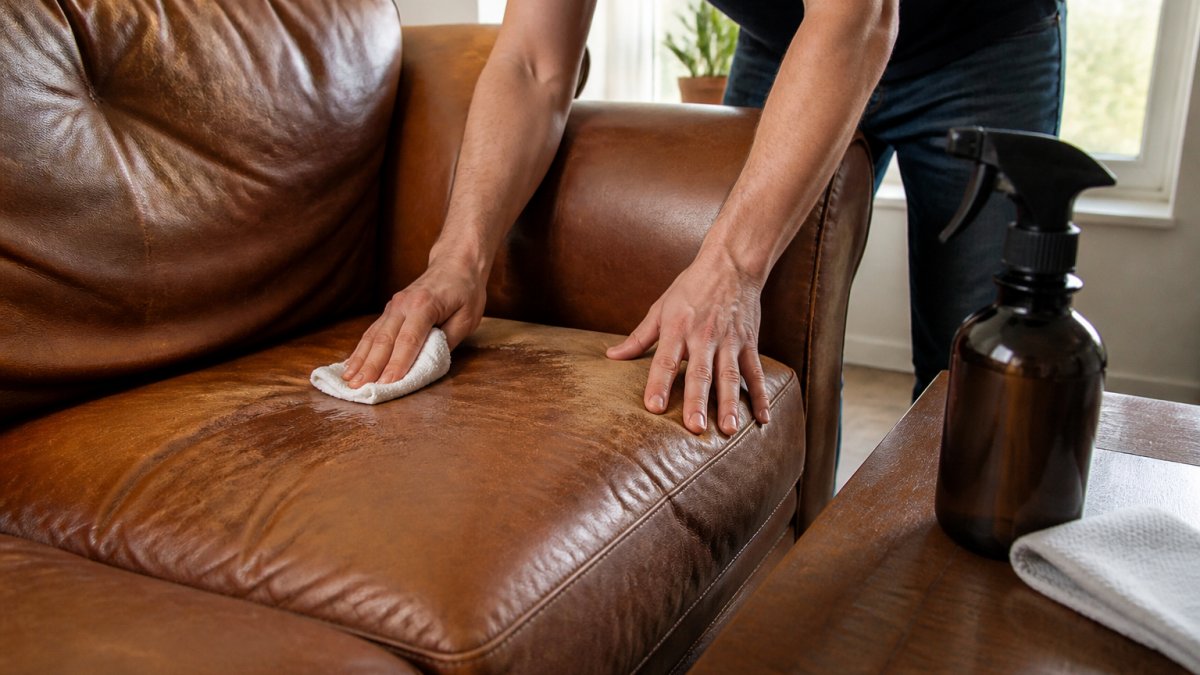
Blot from the outside of the stain inward. This stops the urine from spreading into clean leather around the edge.
How to Get Urine Smell Out of a Leather Sofa
The stain may fade but the smell can linger. Urine soaks into seams and padding, so surface cleaning alone often is not enough.
To get urine smell out of a leather sofa, you need to tackle both the surface and the padding underneath. A common mistake is masking the smell with air freshener. That covers it for a day, then it returns.
Try this approach:
- Clean the surface thoroughly using the steps above
- Sprinkle bicarbonate of soda over the area and leave it for several hours
- Vacuum it up with a soft brush attachment
- Air the room well with open windows
- Repeat if the smell persists
For older or heavier odours, the urine has likely reached the foam cushion. At that point, a professional clean is the reliable fix.
Cleaning Dried Pet Stains from Leather
Dried stains need more patience than fresh ones. The urine has bonded with the leather, and the finish may already be weakened.
Start by softening the stain. Dampen a cloth with warm water and hold it against the stain for a few minutes. This loosens the crust without scratching the surface.
Then:
- Apply a small amount of leather cleaner to a cloth, not directly to the leather
- Work in small circles with light pressure
- Wipe clean with a damp cloth
- Dry naturally, away from direct heat
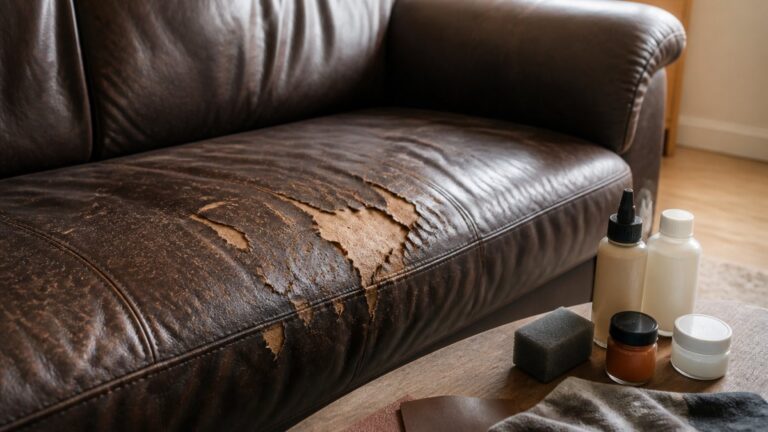
If the stain has left a dull or rough patch, the finish has been damaged. Cleaning will not fix that. It needs restoring, which is where professional help pays off.
Choosing a Leather Cleaner for Pet Stains
Not every cleaner is safe on leather. A leather cleaner for pet stains needs to be pH-balanced and free of harsh solvents.
Here is a quick guide to what to look for:
| Product type | Best for | Watch out for |
|---|---|---|
| pH-balanced leather cleaner | Everyday pet stains | Check it suits your leather type |
| Foam cleaner | Delicate or aniline leather | Test on a hidden patch first |
| Leather cleaning wipes | Quick touch-ups | Too weak for set-in stains |
| Solvent cleaners | Tough grease, not urine | Can strip the finish |
Always test any product on a hidden area first. The back of a cushion or the underside of a seat is ideal. Wait 24 hours to check for discolouration before using it on the visible stain.
The right cleaner is pH-balanced and made for leather. Strong household products often do more harm than the stain itself.
Common Mistakes to Avoid
Most pet stain disasters come from good intentions and the wrong method. Here is what we see most often.
- Rubbing instead of blotting. This drives urine deeper and spreads the stain.
- Using vinegar or bleach. Both can strip the finish and leave a permanent mark.
- Soaking the leather. Too much water causes swelling and cracking as it dries.
- Using a hot hairdryer. Heat sets the stain and dries out the hide.
- Skipping the test patch. A cleaner that works on one sofa can ruin another.
- Ignoring the smell. If it lingers, the urine is still in the padding.
Never use bleach, ammonia or abrasive scourers on leather. These cause irreversible damage to the finish, and no amount of cleaning will bring it back.
When to Call a Professional
Some stains are beyond a cloth and a bottle of cleaner. Call in a professional when:
- The stain has been there for days or weeks
- The leather feels stiff, rough or cracked
- The smell returns after cleaning
- The finish has faded or peeled
- The stain covers a large area
At Uniqcare, our DBS-checked technicians repair leather furniture at your home, so there is no need to move a heavy sofa. We match colour and texture to make repairs invisible, and our service starts from £45. With over 40 years of experience, we can offer an honest assessment of whether a repair is worth it or whether replacement makes more sense.
Frequently Asked Questions
How do you remove pet urine stains from a leather sofa?
Blot up the liquid immediately with a dry cloth, taking care not to rub it into the grain. Mix a mild soap solution with warm water, apply it to the area with a soft cloth, and wipe it away cleanly. For the odour, use a dedicated leather cleaner for pet stains, then condition the leather once it is fully dry to prevent cracking.
Can you use vinegar to clean pet stains from leather?
A diluted white vinegar solution is sometimes suggested for neutralising urine odour on leather. However, its acidity can strip finishes, so it’s generally advised to avoid it. Always test any product on a hidden patch first and follow with a leather conditioner.
Can pet urine permanently damage leather?
Yes, if left untreated. Urine is acidic and can break down the leather’s protective finish, leading to discolouration, cracking, and a lingering smell that is difficult to remove. Fresh stains are much easier to lift. If the urine has soaked deep into the padding or the leather has already cracked, a professional restoration service is often the best route to avoid a full replacement.
When should you call a professional to clean or restore leather?
Call a professional if the stain is old and dried, if the urine has soaked through to the foam, or if the leather has started to crack or peel. A specialist can assess the leather type and use professional-grade cleaners and conditioners to restore the colour and finish without causing further harm.
Pet stains are stressful, but most are fixable. The trick is acting fast and using the right products. When a stain has set in or the finish is damaged, our team at Uniqcare can restore your sofa so it looks and feels right again. Get a quote today and let us bring your furniture back to life.