Table of Contents
- What to Look for in a Leather Cleaner
- How to Remove Stains from Leather Furniture
- Choosing a Leather Conditioner for Sofas
- Leather Furniture Maintenance Tips for Long-Term Care
- Common Mistakes to Avoid with Leather Cleaners
- When to Call a Professional for Leather Repair
- Frequently Asked Questions
Last Updated: September 30, 2026
What to Look for in a Leather Cleaner
Choosing the right leather cleaner comes down to one thing: whether it lifts dirt without stripping the finish that protects your hide. A cleaner that is too harsh will clean the surface and leave it dry, cracked, and dull within months.
At Uniqcare, we have over 40 years of experience restoring leather furniture and vehicle interiors, and the same mistakes show up again and again. Most people reach for whatever is under the sink, then wonder why their sofa looks worse. Below, we break down exactly what separates a safe leather cleaner from a damaging one, and how to spot the difference before you buy.
pH-Neutral Formulas and Why They Matter
A pH-neutral leather cleaner sits close to the natural pH of finished leather, so it removes grime without pulling out the oils that keep the material supple. Leather is slightly acidic by nature, and finished hides carry a protective topcoat that harsh alkaline products break down over time.
Here is the practical difference:
- pH-neutral cleaners clean gently and preserve the topcoat, which is what keeps colour and texture intact.
- Alkaline cleaners cut through grease fast but dry out the surface and accelerate cracking.
- Acidic cleaners can dull the finish and, on some aniline leathers, cause uneven colour.
A common mistake is assuming that a stronger cleaner means a deeper clean. In practice, the opposite is true for leather. You want the mildest product that lifts the soil, applied with patience rather than force.
Reading Labels: Ingredients to Avoid
The fastest way to protect your furniture is to read the back of the bottle before you buy. Several common ingredients do more harm than good on finished leather.
- Alcohols and solvents strip the topcoat and leave the surface dry.
- Bleach and ammonia can discolour and weaken the hide.
- Abrasive particles scratch the finish, especially on darker leathers where scuffs show as light marks.
- Heavy perfumes and dyes can transfer onto pale leather and leave a residue.
If a label lists a strong solvent as the main ingredient, put it back. A dedicated leather cleaner formulated for finished hides will say so plainly. For guidance on how cleaning products are classified and labelled, the Health and Safety Executive guidance on chemicals is a useful reference.
Never test a new cleaner on a hidden area and skip the wait. Some damage, particularly topcoat stripping, only shows up after the surface dries. Leave it a full day before you commit to the whole sofa.
How to Remove Stains from Leather Furniture
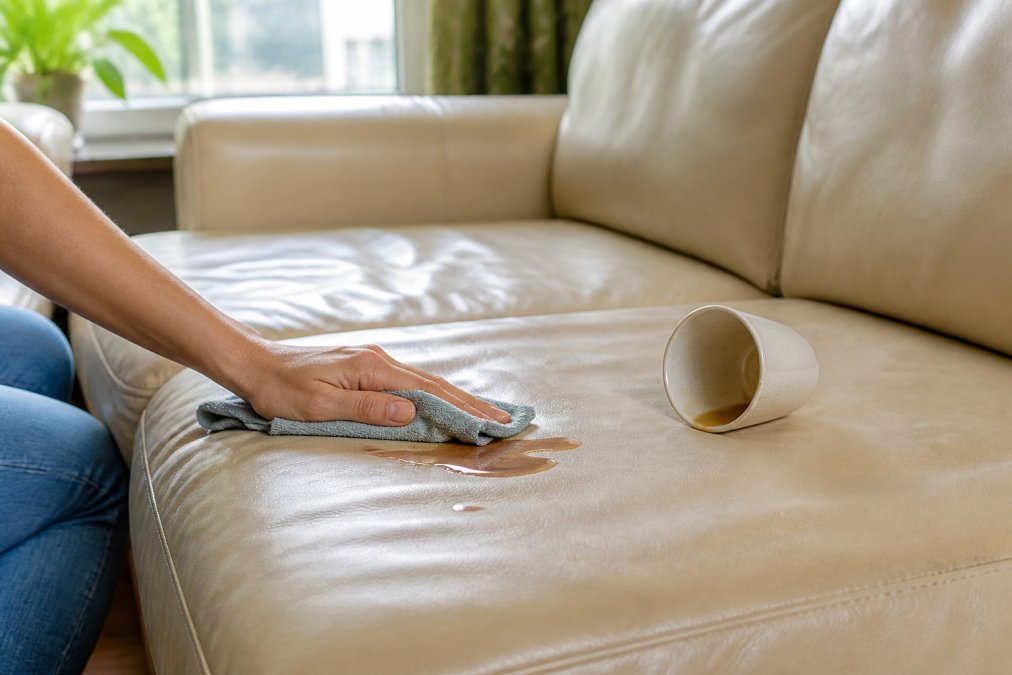
The right approach to stains is speed and restraint: blot fresh spills immediately with a clean cloth, and treat old stains gently with a pH-neutral leather cleaner rather than scrubbing. Most leather damage comes from aggressive rubbing, not from the stain itself.
Act Fast: Fresh Stains vs Old Stains
Fresh stains are straightforward. Blot, do not rub, and lift as much as you can before any liquid soaks in. Old stains are a different job. They have had time to settle into the grain and sometimes into the finish itself, so they need a slower, more patient approach.
The type of stain matters as much as its age:
| Stain Type | Best First Move | What to Avoid |
|---|---|---|
| Water-based (coffee, juice) | Blot with a dry cloth, then wipe with a damp cloth | Soaking the leather |
| Oil-based (butter, cosmetics) | Blot, then use a small amount of pH-neutral cleaner | Rubbing hard |
| Ink | Dab with a dedicated leather cleaner on a cotton bud | Spreading the ink |
| Grease | Lift with a dry cloth, then clean the area | Hot water |
Step-by-Step Stain Removal
Follow this sequence for the best chance of an invisible result:
- Blot the stain with a clean, dry microfibre cloth. Do not rub.
- Apply a small amount of pH-neutral leather cleaner to a separate cloth, never directly onto the leather.
- Work from the outside of the stain inward to stop it spreading.
- Wipe away residue with a clean, damp cloth.
- Dry naturally, away from direct heat or sunlight.
- Condition the area once fully dry to restore suppleness.
If the stain has lifted but the surface still looks patchy or the finish has worn through, that is a repair job rather than a cleaning one.
Choosing a Leather Conditioner for Sofas
A leather conditioner for sofas replaces the oils that cleaning and everyday use remove, keeping the hide supple and helping it resist future cracking. Not every sofa needs the same conditioner, though, and using the wrong one can leave a greasy film or a slippery surface.
Match the conditioner to the leather:
- Finished and pigmented leathers (the most common on modern sofas) need a light, water-based conditioner that sits on the surface without clogging the grain.
- Aniline and semi-aniline leathers are more absorbent and benefit from a product that soaks in, but they mark easily, so test first.
- Protected and bonded leathers need only a light conditioning, as the surface will not absorb much.
Apply a small amount with a soft cloth, work it in evenly, and buff off any excess. Less is more here. A thin, even layer does the job; a heavy layer just attracts dust.
Condition after every two or three cleans, not every time. Over-conditioning is a real problem on finished leather and can leave a tacky surface that grabs lint and dirt.
Leather Furniture Maintenance Tips for Long-Term Care
Good leather furniture maintenance tips come down to routine, not effort. A few minutes of care each week will do more for the life of your sofa than an occasional deep clean.
- Dust weekly with a dry microfibre cloth to stop grit scratching the surface.
- Keep it out of direct sunlight, which fades colour and dries the hide.
- Maintain even distance from heat sources such as radiators and fires.
- Clean spills immediately rather than letting them settle.
- Condition lightly a few times a year.
- Plump cushions to spread wear evenly across the surface.
Many homeowners find that a simple weekly routine prevents the wear patches and cracking that lead to expensive repairs later. If you do notice a small tear, scuff, or worn patch, addressing it early is almost always cheaper than waiting.
Common Mistakes to Avoid with Leather Cleaners
The most damaging mistakes with leather cleaners are easy to make and expensive to fix. Avoid these and your furniture will last years longer.
- Using household multi-surface sprays. These are formulated for hard surfaces and are far too harsh for leather.
- Soaking the leather. Excess moisture seeps into seams and can cause the finish to lift.
- Scrubbing stains. Friction damages the topcoat and creates a dull patch that is more noticeable than the original stain.
- Skipping the test patch. Always test on a hidden area first.
- Conditioning too often. This leaves a greasy film that attracts dirt.
- Using the wrong product for the leather type. Aniline and finished leathers need different care.
Most leather damage is caused by the wrong product or too much force, not by the stain itself. Choose a pH-neutral leather cleaner, apply it gently, and let the product do the work.
When to Call a Professional for Leather Repair
Cleaning handles dirt and light marks. It cannot fix what has already been damaged. Once the finish has worn through, a seam has split, or a tear has opened, cleaning products will not bring it back, and DIY kits often make it worse.
Signs it is time to call in a professional:
- The colour has worn away and the surface looks patchy.
- A tear, cut, or split seam has appeared.
- The leather feels stiff or has started to crack.
- A previous DIY repair is visible and uneven.
- The damage covers a large area or sits on a high-wear spot.
Uniqcare repairs leather, fabric, and carpets directly at your home, so there is no need to send furniture away or take your car off the road.
Frequently Asked Questions
What is the best way to clean leather furniture?
Start by dusting with a dry microfibre cloth, then apply a small amount of pH-neutral leather cleaner to a separate cloth, not directly to the leather. Wipe in gentle circular motions, and buff dry immediately. For tough spots, use a soft brush. Always test on a hidden area first. Avoid soaking the leather; excess moisture can damage the finish and cause cracking over time.
Can you use household products to clean leather?
Household items like vinegar, alcohol, or washing-up liquid can strip leather’s natural oils and cause discolouration or cracking. Even mild soap can leave residue that attracts dirt. A dedicated leather cleaner is formulated to lift grime without harming the finish. If you must improvise, a diluted mild soap is a last resort, but it’s safer to use a proper product.
How often should you apply leather cleaner and conditioner?
For most sofas, clean every three to six months, and condition twice a year. In high-use homes or with pets, clean monthly. Car interiors may need more frequent attention. Always condition after cleaning to restore suppleness. Over-conditioning can leave a greasy film, so stick to the schedule. If leather feels dry, condition sooner.
How do I know if a leather cleaner is safe for my sofa?
Check the label for pH-neutral or balanced formulas, and avoid harsh solvents. Test on an inconspicuous area first, like the back or underside of a cushion. If the colour transfers or the texture changes, do not use it. For aniline or unfinished leather, use only products specifically designed for that type, as they are more absorbent and prone to staining.
Leather that looks tired does not have to be replaced. The right cleaner, a sensible routine, and prompt attention to damage will keep a good sofa or car interior looking its best for years. When cleaning is not enough, Uniqcare offers invisible repair of cuts, scrapes, and wear patches, with repairs carried out at your home and a cost-effective approach built on over 40 years of experience. Get a quote from Uniqcare and restore the value and comfort of your furniture without the fuss.