Table of Contents
- What a Mobile Furniture Repair Visit Covers
- How to Book Mobile Sofa Repair at Your Home
- Leather Furniture Repair: What Can Be Fixed Without Replacing
- Furniture Scratch Repair: Matching Colour and Texture
- What Affects Furniture Repair Cost
- Common Mistakes That Make Damage Worse
- Conclusion: Getting Your Furniture Repaired
- Frequently Asked Questions
Last Updated: October 12, 2026
What a Mobile Furniture Repair Visit Covers
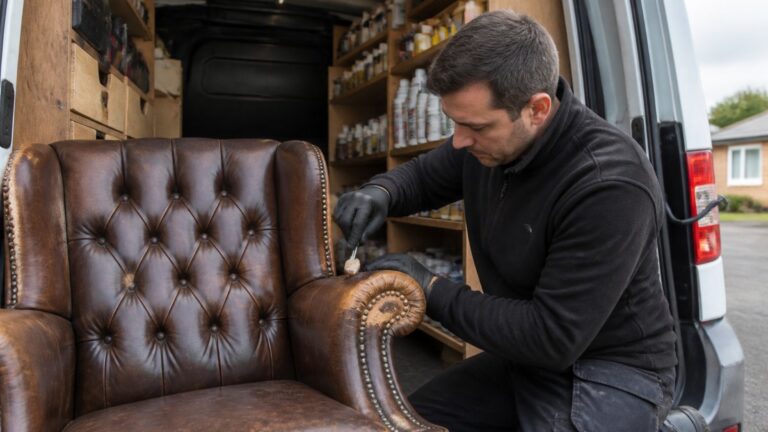
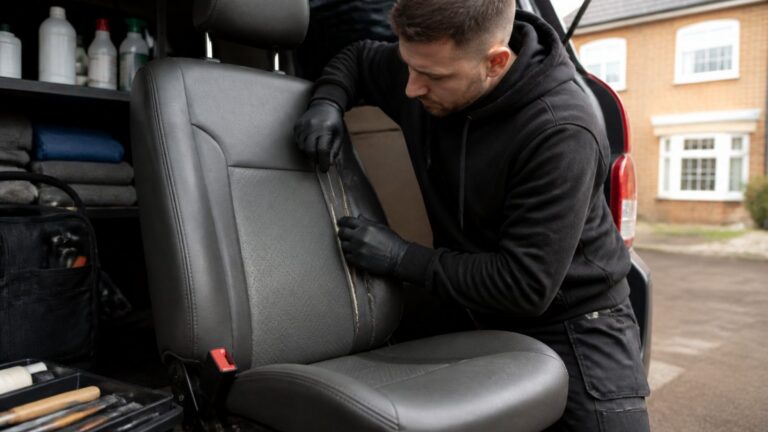
A mobile furniture repair visit brings the workshop to your front room. At Uniqcare, our technicians arrive at your home and repair leather, fabric and carpet damage on site, so your furniture never leaves the house. Most jobs are finished in a single visit, which matters when a sofa is the centre of family life.
That convenience is exactly what mobile furniture repair West Midlands homeowners ask us about most. Nobody wants a three-piece suite loaded into a van and returned weeks later.
A typical visit covers:
- Cuts, scuffs and scratches on leather and faux leather
- Wear patches on armrests, headrests and seat cushions
- Burn marks, ink stains and pet damage
- Colour matching and refinishing across a repair area
- Fabric pulls, snags and small tears
- Loose seams and minor structural tightening
We work from a fully equipped van, so most repairs need no workshop time at all. Our technicians are fully DBS checked, and we’ve been doing this work for over 40 years.
If you’re weighing up repair against replacement, the government guidance on reducing household waste is worth a read. Keeping a serviceable sofa in use is almost always the greener option.
How to Book Mobile Sofa Repair at Your Home
Booking mobile sofa repair takes one message and one photo. Send us a picture of the damage, tell us the material and your postcode, and we’ll confirm a visit slot. We cover the whole region, so there’s no need to worry about whether we reach you.
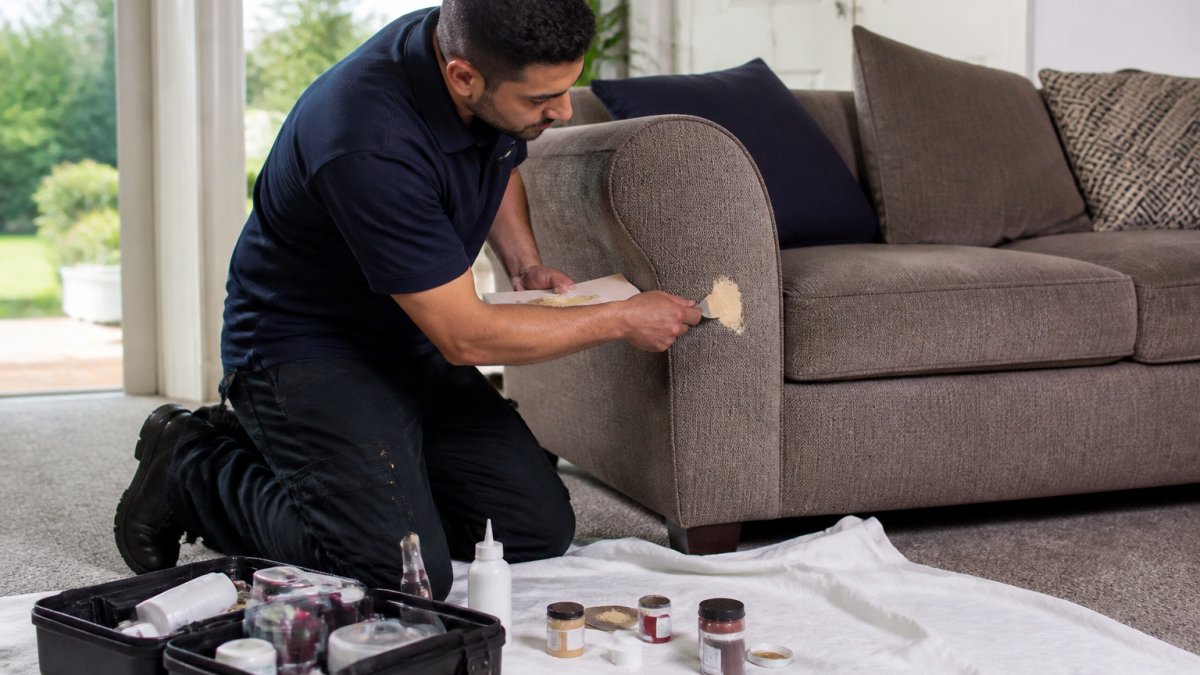
Here’s the process, start to finish:
- Send photos of the damage and the material type
- Tell us your postcode and preferred day
- We confirm the visit and what to expect
- The technician repairs on site, usually within the same visit
- You inspect the finished work before we leave
What to Have Ready Before the Technician Arrives
Clear access to the furniture and good lighting make a real difference. Move anything fragile out of the way, and if you can, pull the piece away from the wall so the technician can reach every side.
A few practical points:
- Clear a working area around the furniture
- Have the material details to hand if you know them
- Keep pets and small children clear of the workspace
- Note any previous DIY repairs so we can account for them
That last point matters more than people expect. A patchy repair kit applied months ago changes how the surface takes a new colour match.
Leather Furniture Repair: What Can Be Fixed Without Replacing
Leather furniture repair fixes far more than most owners realise. Cuts, scuffs, cracking, colour loss and worn patches can all be treated on site, and the repair is designed to be invisible once it’s finished.
What we can usually restore without replacement:
- Surface scratches and scuff marks
- Small cuts and tears
- Colour fading on sun-exposed areas
- Cracked or dried-out panels
- Ink, dye and light stain marks
The one honest limitation: a large structural tear through the hide, or a panel that’s completely perished, may not be worth repairing. We’ll tell you straight if that’s the case rather than take the job anyway.
What most guides miss is that leather has to be cleaned and degreased before any colour goes on. Skip that step and the repair lifts within weeks. It’s the single most common reason DIY leather repairs fail.
Furniture Scratch Repair: Matching Colour and Texture
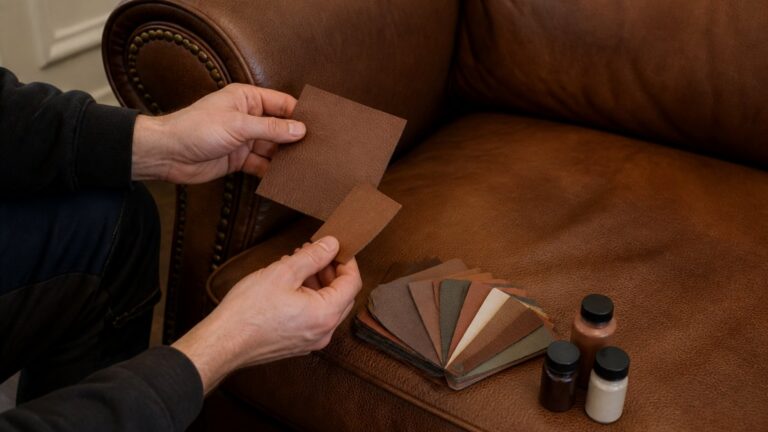
Furniture scratch repair lives or dies on the colour and texture match. A scratch that’s filled but the wrong shade looks worse than the scratch did.
The British Standards Institution guidance on colour assessment explains why lighting matters here. Colour that matches under a workshop lamp can look wrong under your living room window, so we always check the repair in the room where the furniture sits.
How we match the finish:
| Damage Type | Repair Approach | Typical Result |
|---|---|---|
| Light surface scratch | Colour blend and seal | Invisible in normal light |
| Deep scratch | Fill, level, then recolour | Blends with surrounding grain |
| Scuffed patch | Clean, recolour, protect | Even tone across the area |
| Torn leather | Sub-patch, fill, texture | Texture matched to the panel |
Texture is the harder half. Leather grain varies across a single sofa, so the technician builds the pattern back rather than spraying a flat colour over it.
What Affects Furniture Repair Cost
Furniture repair cost depends on the damage, not on a fixed price list. Four things move the number more than anything else: the size of the damaged area, the material, how many separate spots need work, and whether the damage is surface-level or structural.
A single scuff on a leather armrest is a very different job from a torn seam with colour loss across two cushions. Distance also plays a part, since the technician travels to you.
Rather than guess, we quote after seeing photos. That way you know the figure before anyone sets foot in your home, and there’s no surprise on the day.
Don’t accept a phone quote without a photo. Any honest provider needs to see the damage first. A quote given blind is either padded to cover the risk or low enough to change once the technician arrives.
Common Mistakes That Make Damage Worse
The biggest mistake is reaching for a household product before you know what the material is. This is where most well-meaning owners go wrong, and it’s often irreversible.
Watch for these:
- Using a generic leather kit on bonded or faux leather. The colour sits on the surface and flakes.
- Rubbing a scratch hard with a cloth. This spreads the damage and dulls the surrounding finish.
- Applying heat to dry out a dent. It can shrink and crack the material instead.
- Taping over a tear. Adhesive residue is far harder to remove than the tear was to fix.
- Leaving a spill to soak in. Stains set with time, and set stains cost more to lift.
If you’ve already tried a repair and it made things worse, that’s a common call for us. We can often rework a failed DIY attempt, though it takes longer than starting fresh.
Conclusion: Getting Your Furniture Repaired
Repairing rather than replacing is usually the sensible call, and it’s rarely the hassle people fear. The trick is getting to it before the damage spreads and before a DIY attempt makes the surface harder to match.
At Uniqcare, we’ve spent over 40 years repairing leather, fabric and carpets at people’s homes across the region. Our fully DBS checked technicians handle colour matching, texture work and invisible repairs on site, from a single scuff to a full panel restoration.
Get a quote from Uniqcare and put your furniture back in use without it ever leaving the room.
Frequently Asked Questions
What does a mobile furniture repair service fix?
A mobile service handles damage that does not need a workshop: cuts, scuffs, scratches, cigarette burns, worn patches, pet damage and colour loss on leather, fabric and carpets. Technicians match colour and texture on site so repairs blend in. If a frame is broken or a mechanism has failed, that may need workshop attention, though most cosmetic damage on sofas, chairs and car interiors can be sorted at your home in one visit.
Can a damaged sofa be repaired at home?
Yes, in most cases. Mobile sofa repair covers tears, worn arms, sagging patches and colour loss without moving the sofa. The technician brings fillers, pigments and sealers to your address, and a typical repair takes one to three hours depending on the number of areas. You keep the sofa in place, avoid the cost of removal and delivery, and can inspect the finish before the technician leaves.
How much does mobile furniture repair cost?
Furniture repair cost depends on the type of damage, the material, how many areas need work and your location within the West Midlands. A single scratch repair is priced differently from a full leather seat restoration. You can request a quote with photos of the damage for a more accurate figure before booking.
Is it worth repairing old or damaged furniture?
Compare the repair quote with the cost of a comparable replacement, then factor in delivery, disposal of the old item and the risk that a new piece wears the same way. Repair usually costs less than replacing a quality sofa or armchair, and it keeps a piece you already know suits your space. If the frame is sound and the damage is cosmetic, repair is normally the better-value route.