Last Updated: 22 October 2026
Quick Summary
Car interior restoration increases resale value because it removes the visible reasons a buyer will haggle or walk away, such as worn seats and torn trim that signal neglect. A clean, intact cabin signals careful ownership, so buyers pay more and haggle less. Your interior is the cheapest part of the car to improve and the part buyers inspect most closely.
- Buyers judge a car from the driver’s seat first, so a tired cabin makes haggling feel justified.
- Repair cracked leather car seats by cleaning, filling and recolouring, in that order, with colour matching the key.
- Most DIY leather kits fail through poor colour match, no flexibility and no proper prep, and can widen the damage.
- Car interior detailing is the lowest-cost step before selling, though it will not fix cracks.
- Fix cracks and tears on the driver’s seat first when working through your pre-sale checklist.
Table of Contents
- Why Car Interior Restoration Increases Resale Value
- The Hidden Cost of a Worn Interior
- How to Repair Cracked Leather Car Seats Before Selling
- The Real Cost to Repair Leather Car Seats
- Car Interior Detailing: The Cheapest Way to Lift a Sale Price
- Your Car Resale Value Checklist
- When Restoration Beats Selling As-Is
- Frequently Asked Questions
Why Car Interior Restoration Increases Resale Value
Car interior restoration is the process of repairing worn, cracked or damaged cabin surfaces so the vehicle presents better to buyers. At Uniqcare, we have spent over 40 years restoring furniture and vehicle interiors, and we know one simple truth: buyers judge a car from the driver’s seat first.
A clean, intact cabin signals careful ownership. Worn seats and torn trim signal neglect, and buyers price that neglect in. That is why car interior restoration increases resale value: it removes the visible reasons a buyer will haggle or walk away.
Below, we explain what a worn interior really costs you, how repairs work, and what to fix first.
The Hidden Cost of a Worn Interior
The biggest hit is not the repair bill. It is the discount a buyer demands when the cabin looks tired.
A worn driver’s seat is the first thing a buyer touches. Cracked leather on the bolster reads as years of hard use, even when the mechanics are sound. So the buyer offers less, or moves on.
- Buyers assume the worst from visible damage
- A tired cabin makes haggling feel justified
- Private buyers compare your car to cleaner ones nearby
- Dealers knock money off trade-in offers for worn trim
Your interior is the cheapest part of the car to improve. It is also the part buyers inspect most closely.
How to Repair Cracked Leather Car Seats Before Selling
The right way to repair cracked leather car seats is to clean, fill and recolour, in that order. Skipping steps or rushing the finish is what causes patchy results.
Here is how a professional repair works:
- Clean the leather thoroughly and let it dry fully
- Remove loose fibres from the cracks
- Apply flexible filler in thin layers, building up slowly
- Sand back gently between layers
- Apply a colour-matched coating over the repair
- Seal the finish so it wears evenly
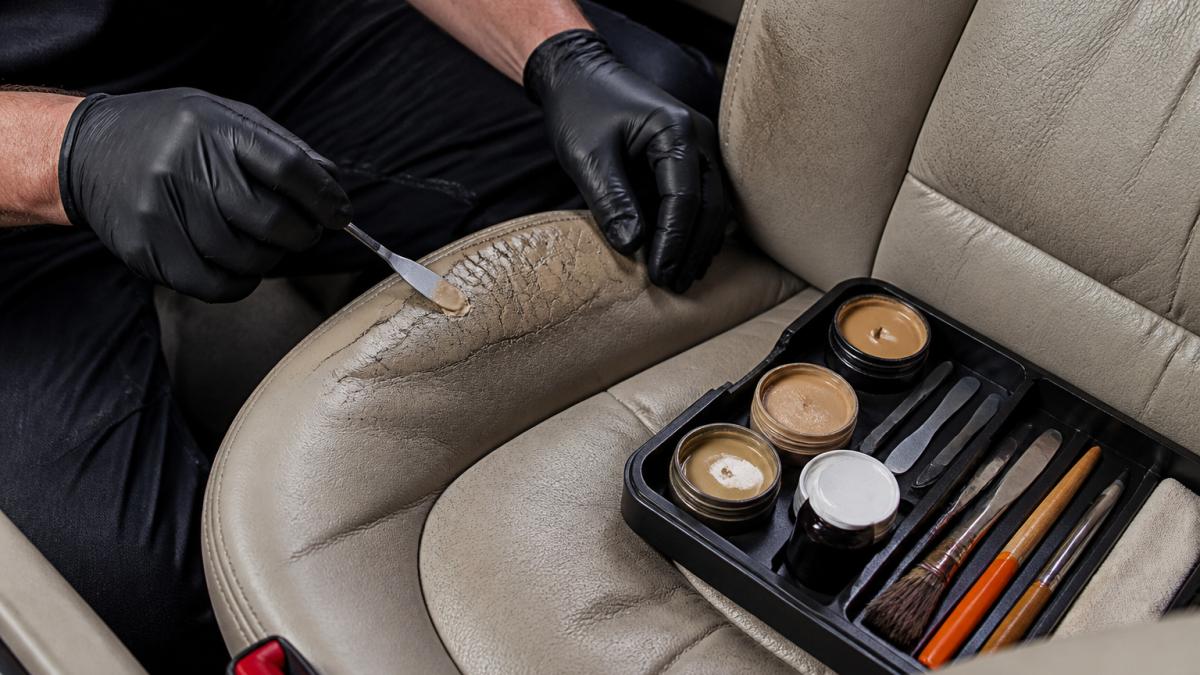
The key is colour matching. If the finish does not blend, the repair stands out more than the damage did.
Why DIY Kits Often Make Cracks Worse
Most DIY leather kits fail for three reasons: poor colour match, no flexibility, and no proper prep.
A rigid filler on a seat that flexes every day will crack again within weeks. A colour that is slightly off looks worse than the original wear. And without a proper clean, the coating lifts.
- Colour rarely matches the existing finish
- Fillers dry hard and split under body weight
- Poor prep stops the coating bonding
- Repairs fail fast and cost more to fix properly
A failed DIY repair can lift the surface around the crack, making the damage wider than it was. That turns a small fix into a full panel recolour.
The Real Cost to Repair Leather Car Seats
The cost to repair leather car seats depends on the size of the damage, the leather type and how many panels are affected. There is no single figure that fits every car.
Small repairs cost far less than replacing a seat cover. A professional repair also keeps the original seat, which matters to buyers who check for originality.
Pricing depends on the job, so ask for a quote rather than guessing. At Uniqcare, we assess the damage first and quote before any work starts.
Fix damage early. A small crack repaired now costs far less than a torn bolster left for a year, which often needs a full panel recolour.
Car Interior Detailing: The Cheapest Way to Lift a Sale Price
Car interior detailing is a deep clean of the cabin, and it is the lowest-cost step you can take before selling. It will not fix cracks, but it lifts everything else.
A proper detail covers:
- Shampooing seats and carpets
- Cleaning and feeding leather
- Wiping down the dashboard and trim
- Clearing vents, door pockets and the boot
- Removing odours at the source
Detailing makes a car feel cared for. Pair it with a repair on the worst damage and the cabin reads as genuinely well kept.
Your Car Resale Value Checklist
Work through this list before you list the car. It is the order we would follow.
- Wash and vacuum the whole cabin
- Treat leather with a conditioner, not a shiny dressing
- Repair cracks and tears on the driver’s seat first
- Fix burns, scuffs and worn patches on trim
- Replace worn floor mats
- Clear all personal items and rubbish
- Check the boot and spare wheel well
- Photograph the interior in daylight for the advert
| Task | Effort | Impact on Sale |
|---|---|---|
| Full interior detail | Low | High |
| Leather repair on driver’s seat | Medium | High |
| Trim and scuff repair | Medium | Medium |
| New floor mats | Low | Medium |
| Odour removal | Low | High |
When Restoration Beats Selling As-Is
Restoration wins when the damage is cosmetic and the car is otherwise sound. A cracked seat or worn trim is a cheap fix with a clear return.
Selling as-is makes sense in a few cases:
- The damage is structural, not cosmetic
- The repair cost outweighs the value it adds
- You are selling to a trade buyer at a fixed price
For most private sales, a professional repair pays for itself. Buyers pay more for a cabin that looks looked-after, and they haggle less.
Frequently Asked Questions
Does restoring a car interior increase its resale value?
Yes, in most cases. A buyer sees the interior the moment they open the door, and worn seats, cracked leather or stained carpets suggest the car has been neglected. Car interior restoration removes that objection and often lifts the achievable price by more than the repair costs. The gain is largest on cars with otherwise clean bodywork and full service history, where a scruffy cabin is the only thing holding the price back. Get a quote first so you can compare the outlay against the difference you expect at sale.
Is it worth repairing cracked leather car seats before selling?
Usually yes, especially on the driver’s seat bolster, which is the first thing a buyer inspects. Cracks read as expensive trouble to a buyer, even when the damage is only cosmetic. A professional repair that matches colour and grain removes that doubt for far less than a buyer would knock off the price. If you plan to part-exchange, a repaired seat also avoids a trader using the damage as a reason to lower their offer on the spot.
How much does a worn interior affect a car’s value?
There is no fixed figure, because it depends on the car, the damage and the buyer. What matters is how the damage shifts the negotiation. A cracked seat or a burn hole gives a buyer a concrete reason to push the price down, and traders price that risk in before they even view the car. Repairing the damage first removes the lever. Ask for a quote on the specific repairs, then compare it with the reduction you would otherwise accept.
Should I restore my car’s interior before selling or trading it in?
Restore it before you advertise or accept a part-exchange offer. Private buyers pay for presentation, and a clean, repaired cabin photographs better and invites fewer questions. Traders also inspect interiors closely and will deduct for damage. Book the work a few weeks before you plan to sell so everything is finished, then follow a car resale value checklist covering seats, carpets, headlining and door cards before the first viewing.
A worn interior quietly costs you money at sale time, and most sellers never see it coming. Uniqcare has over 40 years of experience repairing leather, fabric and trim, with fully CRB checked technicians who work at your home. We match colour and texture so repairs blend in, and we quote before we start, so there are no surprises. Get a quote from Uniqcare and sell your car with a cabin that earns its price.