Last Updated: 24 October 2026
Quick Summary
The best leather cleaners for home use are pH-balanced foams for everyday finished sofas, with combined cleaner-conditioners, gentle aniline lotions, heavy-duty degreasers and stain remover kits covering the rest. Match the formula to your leather type, apply product to a cloth rather than the hide, and always test on a hidden panel first.
- A pH-balanced foam suits weekly maintenance on finished leather and typically costs £10-£16.
- Never pour cleaner directly onto leather; apply a small amount to a soft microfibre cloth instead.
- Combined cleaner-conditioners can darken aniline leather unevenly, so test a hidden panel first.
- Use a concentrated degreaser sparingly, once a season at most, and rinse thoroughly to avoid stripping the finish.
- Vacuum crevices first, test in a hidden spot, use minimal product, rinse residue and dry promptly.
Table of Contents
- Quick Comparison: The 7 Best Leather Cleaners for Home Use
- How We Chose and Tested These Leather Cleaners
- 1. A pH-Balanced Foam Cleaner for Everyday Sofa Care
- 2. A Leather Sofa Cleaner and Conditioner in One Bottle
- 3. A Gentle Cleaner for Aniline and Delicate Leather
- 4. A Heavy-Duty Cleaner for Grease and Body Oils
- 5. A Stain Remover for Ink, Dye and Food Marks
- How to Clean a Leather Sofa Without Damaging the Finish
- Frequently Asked Questions
Quick Comparison: The 7 Best Leather Cleaners for Home Use
Finding the best leather cleaners for home use starts with matching the product to your leather type, not to the loudest label on the shelf. We spend our working days repairing sofas that the wrong bottle has dulled, dried or stripped, so we know which formulas cause trouble and which ones quietly do their job.
Below is our quick comparison. Prices are typical retail figures, so check current pricing before you buy.
| Cleaner type | Best for | Format | Typical price | Watch out for |
|---|---|---|---|---|
| pH-balanced foam | Everyday sofa care | Foam pump | £10-£16 | Little power on ground-in grease |
| Cleaner and conditioner duo | Finished leather needing moisture | Two-in-one bottle | £12-£20 | Can darken aniline hides |
| Gentle aniline formula | Delicate and unfinished leather | Light lotion | £14-£22 | Needs frequent reordering |
| Heavy-duty degreaser | Headrests, armrests, body oils | Concentrated gel | £12-£18 | Overuse strips the finish |
| Stain remover kit | Ink, dye and food marks | Pen plus solution | £15-£25 | Slow on old, set-in stains |
The five categories we cover below suit almost every household sofa, chair or car seat. A leather cleaner is a product formulated to lift dirt, oils and grime from a leather surface without stripping its finish or drying the hide. Pick the wrong one and you shorten the life of the material. Pick the right one and cleaning takes minutes.
How We Chose and Tested These Leather Cleaners
We judge every cleaner by the same short checklist, built from over 40 years of restoring furniture across the region. Our technicians see the aftermath of bad cleaning daily: cracked panels, patchy colour and peeling coatings. That experience shapes what we recommend.
- pH balance: a neutral formula protects the finish; alkaline cleaners dull it over time
- Rinse behaviour: residue left behind attracts dirt and turns tacky
- Finish safety: no darkening, no chalky bloom, no sticky film after drying
- Ease of use: clear instructions, sensible bottle, no specialist equipment
- Value: how many cleans one bottle delivers
If you want the full clean-condition-protect method behind these criteria, our leather cleaner guide walks through each stage in detail. We have not lab-tested every bottle on the market, and we will not pretend otherwise. What we can tell you is which formulas our technicians reach for, and which ones we would never put near a customer’s sofa.
1. A pH-Balanced Foam Cleaner for Everyday Sofa Care
For most households, a pH-balanced foam is the safest first purchase. Foam sits on the surface, lifts everyday grime and wipes away without soaking the hide. It suits finished leather, which covers the vast majority of sofas sold in the past two decades.
Apply a small amount to a soft microfibre cloth, work it in gentle circles, then buff dry. Never pour cleaner directly onto the leather. A common mistake is scrubbing hard at a mark; friction damages the finish faster than dirt ever will.
Best for: weekly maintenance on finished sofas.
Skip if: your leather is aniline or your problem is grease.
If your sofa sees pet accidents, the standard foam routine is not enough. Our step-by-step pet stain removal guide covers the method for accidents specifically.
2. A Leather Sofa Cleaner and Conditioner in One Bottle
A combined leather sofa cleaner and conditioner saves shelf space and time. These products clean and then leave a light conditioning layer, which helps finished leather stay supple. For busy households, that convenience is worth something.
The trade-off is control. A combined product cannot be tailored to a leather that needs heavy cleaning but light conditioning, or the reverse. On aniline leather, the conditioning element can darken the colour unevenly. Test on a hidden panel first, every time.
Best for: finished leather in good condition.
Skip if: you need targeted stain treatment or own delicate hides.
3. A Gentle Cleaner for Aniline and Delicate Leather
Aniline and semi-aniline leathers have little or no protective coating, so they absorb whatever you put on them. Gentle, water-based lotions are the only sensible choice here. They clean lightly and leave no residue.
What most guides miss is that delicate leather needs cleaning less often, not more. A light wipe every few weeks beats a deep clean that risks water marks. Keep the cloth barely damp and dry the surface straight away.
Best for: aniline, semi-aniline and unfinished hides.
Skip if: you are dealing with oil-based stains, which need specialist attention.
4. A Heavy-Duty Cleaner for Grease and Body Oils
Headrests, armrests and seat fronts collect body oils that ordinary foam will not shift. A concentrated degreaser, diluted as directed, breaks down that build-up. Use it sparingly and rinse thoroughly; residue is the enemy.
The thing nobody tells you about degreasers is how quickly they can strip a finish when overused. Once a season is plenty for most homes. If a patch has gone shiny or tacky, the finish is already compromised, and no cleaner will bring it back.
Best for: high-contact areas on finished leather.
Skip if: your leather is delicate or already showing wear.
5. A Stain Remover for Ink, Dye and Food Marks
Ink, dye transfer from jeans and food marks need a targeted approach. A stain remover kit, usually a pen plus a small solution, lets you treat the mark without cleaning the whole panel. Act fast: fresh marks lift far more easily than set-in ones.
Watch out: aggressive rubbing on an ink mark can spread the dye and take the finish with it. Dab, do not scrub. If the mark has been there for months, or the surface has started to lift, cleaning will not fix it. That is repair territory.
How to Clean a Leather Sofa Without Damaging the Finish
Cleaning a leather sofa safely comes down to five habits: vacuum first, test in a hidden spot, use minimal product, rinse away residue, and dry the surface promptly. Skip any one of these and you raise the risk of dull patches, water marks or a sticky finish.
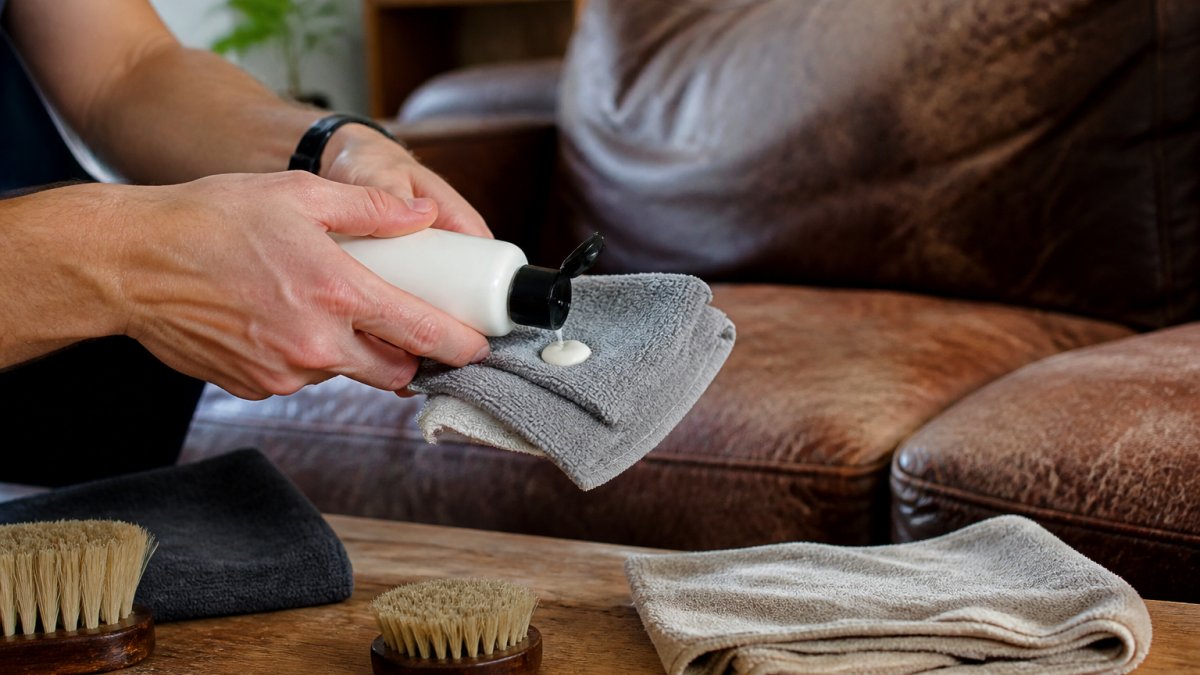
- Vacuum crevices with a brush attachment to remove loose grit
- Test your cleaner on the back or underside of a cushion
- Apply product to the cloth, never the leather
- Work in small sections with light pressure
- Buff dry with a clean cloth and let the sofa air
A surprising number of “cleaning damage” jobs we attend are actually early peeling, triggered by too much moisture and too little drying. Our guide to stopping leather sofa peeling explains the warning signs. If scratches are your concern, whether from pets or from over-enthusiastic cleaning, our cat scratch repair guide covers what can be fixed. And if you want to understand why leather cracks in the first place, our guide to cracking causes and fixes sets out the reasons and the remedies.
For official care guidance, the Leather Naturally industry resource is a useful reference on leather types and finishes. The British Standards Institution publishes standards relevant to furniture performance and labelling, which help when checking what a sofa’s care label actually means.
Frequently Asked Questions
What is the best leather cleaner for a sofa?
There is no single best option, because the right leather cleaners depend on your sofa’s finish. A pH-balanced foam suits most pigmented and corrected-grain sofas, while aniline and delicate hides need a gentler formula with no solvents. Check the care label or test on a hidden patch first. If the leather is cracked, torn or heavily worn rather than just dirty, cleaning will not fix it and a repair assessment is the better next step.
Can you use household cleaners on leather furniture?
Generally no. Washing-up liquid, multi-surface sprays, vinegar and alcohol-based products can strip the protective topcoat, leaving leather dry, patchy and more prone to cracking. Even mild household cleaners leave residue that attracts dirt. Use a product formulated for leather, apply it sparingly with a microfibre cloth, and buff dry. If a spill happens, blot it immediately with a dry cloth rather than reaching for a general-purpose cleaner.
How often should you clean and condition leather furniture?
For most homes, a light clean every two to three months and a full clean and condition every six to twelve months is enough. Sofas in daily use, homes with pets, or furniture near radiators may need attention more often. Condition after cleaning, not before, so the product can absorb properly. Over-cleaning causes more harm than under-cleaning, so wipe dust weekly and save the full routine for when the leather looks dull or feels dry.
Can leather cleaner remove stains from a sofa?
It depends on the stain. Fresh food and drink marks usually lift with a dedicated leather stain remover and gentle blotting. Ink, dye transfer from jeans and old oil marks are harder and can spread if rubbed. Always test on a hidden area, work from the outside of the stain inwards, and stop if the colour starts to shift. Deep or set-in stains, plus any tears or scuffs around them, are best assessed by a professional before you try anything stronger.
Most leather damage we see at Uniqcare started with a cleaning product that was too strong or a technique that was too rough. If your sofa has already moved past cleaning, we restore cuts, scrapes and wear patches in your home, with colour and texture matched to your furniture. Our technicians are fully CRB checked, we bring over 40 years of experience to every job, and our local service starts from £45. Get a quote from Uniqcare and bring your furniture back to how it should look.