Table of Contents
- Why Leather Sofa Peeling Happens and How to Stop It Spreading
- What You’ll Need Before You Start
- How to Repair Peeling Bonded Leather Step by Step
- How to Fix a Peeling Faux Leather Sofa Without Making It Worse
- Do Leather Sofa Repair Kits Actually Work?
- Leather Sofa Peeling Repair Cost: What Affects the Price
- Common Mistakes That Make Peeling Worse
- Conclusion
- Frequently Asked Questions
Last Updated: 13 October 2026
Why Leather Sofa Peeling Happens and How to Stop It Spreading
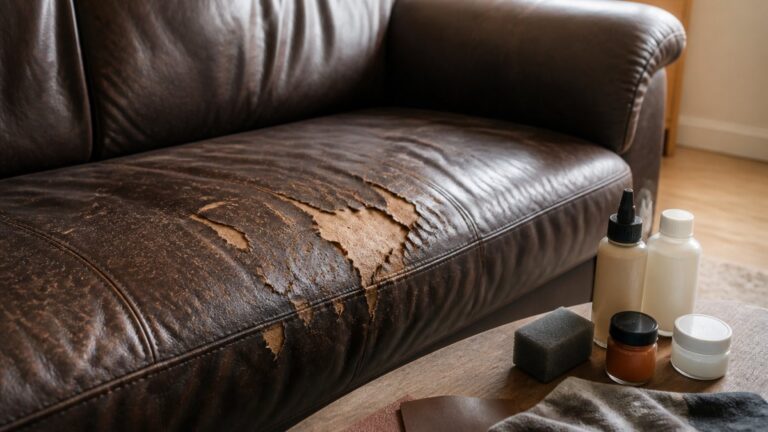
Leather sofa peeling is the flaking or lifting of a surface coating from the sofa’s material, and it happens because that coating has dried out, lost its bond, or was never leather in the first place. At Uniqcare, we see this damage constantly across the West Midlands, and the good news is that early action stops it spreading.
Here’s the key point most people miss: the fix depends entirely on what your sofa is actually made of. Real leather rarely peels. Bonded and faux leather peel all the time.
So before you buy any product, work out your material type. That single step decides whether you repair it, recover it, or replace it.
Never pick at a lifting edge “to see how bad it is”. Every piece you pull away takes the coating with it and exposes more of the backing. That turns a small patch into a large one within days.
The Difference Between Real, Bonded and Faux Leather
Real leather is the full hide, tanned and finished. It creases, softens and ages, but it does not flake off in sheets.
Bonded leather is ground leather fibres mixed with a binder, then covered with a thin polyurethane top layer. That top layer is what peels.
Faux leather is a fabric or plastic base with a similar sprayed-on finish. It peels for the same reason.
The tell is simple. Look at the underside of a lifted edge. If you see a grey, fuzzy backing, it is bonded or faux. If you see a solid, fibrous hide, it is real.
Which? guide to furniture materials and durability
What You’ll Need Before You Start
Gather your kit first so you are not hunting for tools mid-repair. A half-finished repair dries out and looks worse than the original damage.
- A leather repair kit with colour-matched filler, or a flexible compound
- Isopropyl alcohol and a clean lint-free cloth
- Fine sandpaper (around 600 grit)
- A small palette knife or spatula
- A hairdryer on a low setting
- Low-tack masking tape
- A soft brush for the final seal
Work in a warm, well-ventilated room. Cold air slows the drying and can leave a tacky finish.
How to Repair Peeling Bonded Leather Step by Step
Repairing peeling bonded leather means stabilising the loose edge, filling the gap, then colouring and sealing the patch so it blends in. Done well, the repair is invisible from normal viewing distance. Done badly, it looks patchy and peels again within weeks.
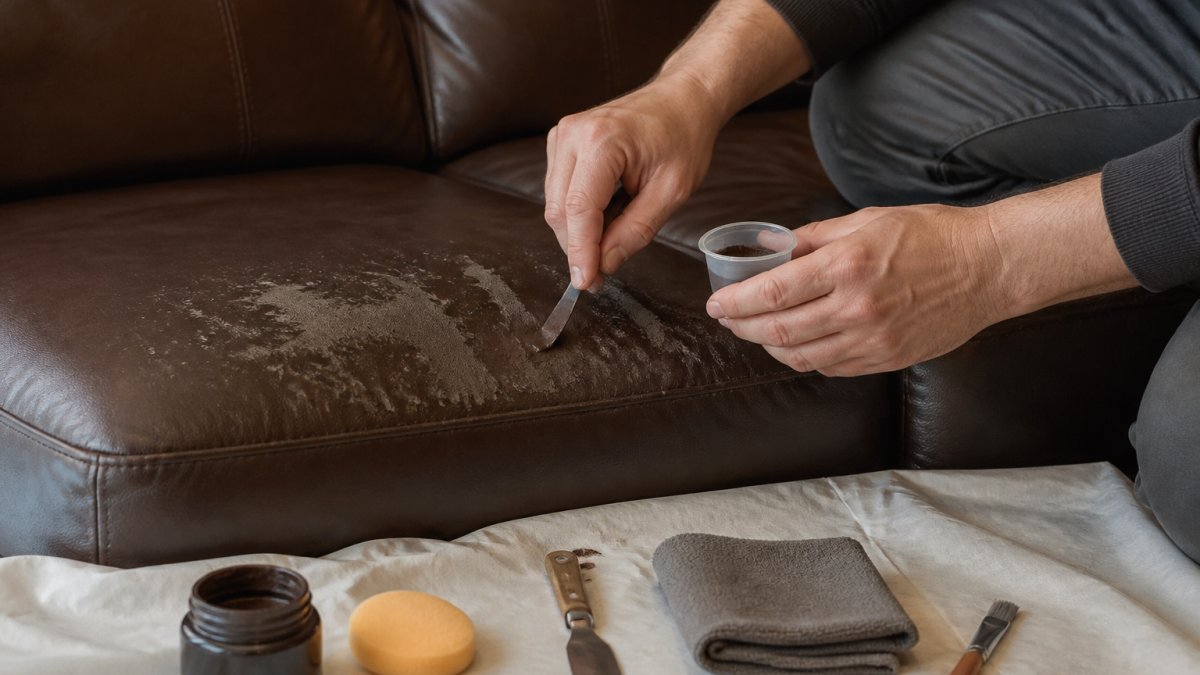
Preparing and Stabilising the Peeling Area
- Clean the whole area with isopropyl alcohol and let it dry fully.
- Trim any loose flakes with small scissors. Do not pull them.
- Tape off the surrounding good leather so filler stays on the patch.
- Lightly scuff the exposed backing with fine sandpaper so the filler grips.
Filling, Colouring and Sealing the Repair
- Apply filler in thin layers with the palette knife.
- Dry each layer with the hair dryer on low before adding the next.
- Build up until the patch sits level with the surrounding surface.
- Apply colour-matched pigment in thin coats, blending outwards.
- Seal with a flexible top coat and let it cure for 24 hours.
That is the honest version of the DIY route. It works on small patches. On a large, widespread peel, the result rarely holds.
How to Fix a Peeling Faux Leather Sofa Without Making It Worse
Faux leather needs a gentler approach than bonded leather because the finish is even thinner. The biggest mistake is using heat or harsh solvents, which lift more of the coating.
Stick to these rules:
- Use a flexible filler made for synthetic finishes, not a rigid one.
- Skip the hair dryer on faux leather. Let it air dry.
- Never scrub the peeling area with abrasive cleaners.
- Patch small areas only. Large sections need a professional.
If more than a palm-sized area has peeled, patching usually makes the sofa look worse, not better.
Do Leather Sofa Repair Kits Actually Work?
Leather sofa repair kits work well on small, contained damage and poorly on widespread peeling. That is the honest answer, and it is where most kits get oversold.
A kit gives you filler, pigment and a sealant. That is enough for a scuff, a small tear, or a coin-sized peel. It is not enough for a whole cushion that has shed its coating.
Match the tool to the damage. Small patch, small kit. Large peel, professional repair. Buying a kit for a big job wastes money and usually ends in a worse-looking sofa.
Leather Sofa Peeling Repair Cost: What Affects the Price
Leather sofa peeling repair cost depends on the size of the damaged area, the material type, and whether the repair is done at your home or in a workshop. There is no single figure, and any quote that promises one before seeing the sofa is guessing.
What moves the price:
| Factor | Why It Matters |
|---|---|
| Size of peeled area | Larger patches need more filler, pigment and time |
| Material type | Bonded and faux leather need different products |
| Number of cushions | More panels means more colour matching |
| On-site or workshop | Home visits save you transport and downtime |
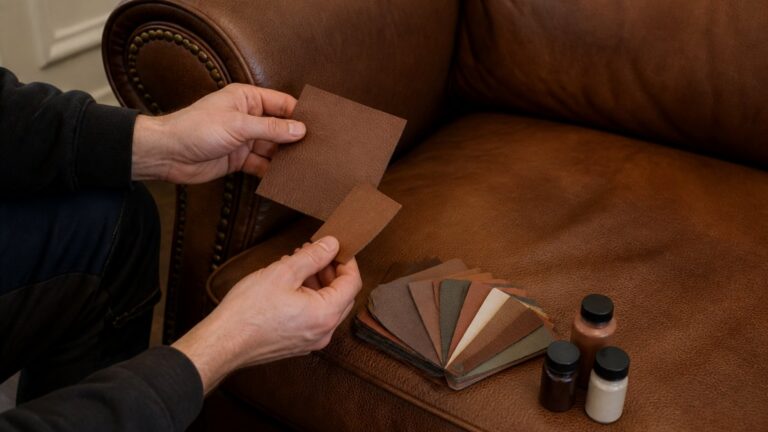
| Colour match difficulty | Unusual shades take longer to blend |
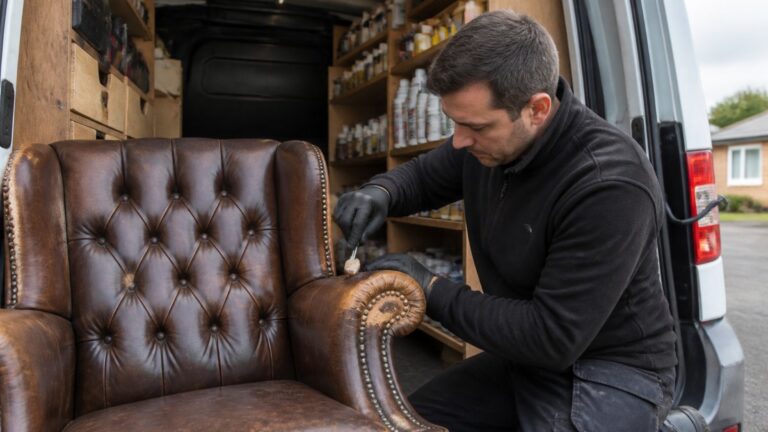
At Uniqcare, we assess the damage first and quote from there. Our repairs are carried out at your home, so your sofa never leaves the room. Citizens Advice guidance on getting a repair quote
Common Mistakes That Make Peeling Worse
Most failed repairs share the same handful of errors. Avoiding them is half the battle.
- Pulling at loose flakes instead of trimming them.
- Skipping the cleaning step, so filler will not bond.
- Using a rigid filler on a flexible surface.
- Layering filler too thickly and trapping moisture underneath.
- Colouring before the filler has fully cured.
- Using heat on faux leather.
If you have already tried a kit and made things worse, you are not alone. We fix more botched DIY repairs than anything else, and the original damage is usually still repairable.
Conclusion
Peeling leather is a problem you can slow down, and in many cases stop, but only if you match the method to the material and act before the damage spreads. Small patches suit a careful DIY repair. Large, widespread peeling needs a professional eye and the right products.
At Uniqcare, we bring over 40 years of experience to every job, with fully DBS-checked technicians who repair furniture at your home. We handle leather, fabric and carpets, matching colour and texture so the repair disappears. If your sofa is peeling and you are not sure whether it is worth saving, get a quote.
Frequently Asked Questions
Can you stop a leather sofa from peeling?
You can stop peeling from spreading by stabilising the flaking edges and sealing the surface, but the damaged material itself cannot be restored to its original state. Bonded and faux leather have a thin top layer that breaks down with friction, sweat and cleaning products. Once that layer lifts, the fix is to re-bond the edges, fill the gap and recolour the patch so it blends in. Acting early, before the peeling spreads across a whole cushion, gives the best result.
Why is my leather sofa peeling?
Peeling usually means the sofa is bonded leather or faux leather rather than full-grain hide. These materials have a polyurethane coating over a fibre or split-leather base, and that coating wears away where bodies rub most: seat fronts, armrests and headrests. Body oils, sunscreen, heat from radiators and harsh household cleaners speed up the breakdown. Genuine aniline or semi-aniline leather tends to crack and fade instead of peeling, which is a useful clue when you are trying to identify what you own.
Can peeling bonded leather be repaired, or is it worth replacing the sofa?
Bonded leather peeling can be repaired, and repair is often worth it if the frame, cushions and stitching are still sound. A professional recolour and seal typically costs a fraction of a new sofa and can add years of use, particularly on a piece you still find comfortable. Replacement makes more sense when the base material has crumbled across multiple seats, the frame is failing, or the sofa was a low-cost flat-pack item nearing the end of its life.
How do you repair a peeling faux leather sofa without making it worse?
Work on a small test patch first, and never pull at loose flakes, as this tears the coating further. Clean the area with a mild soap solution and let it dry fully, then trim only the edges that are already lifting. Apply a flexible filler in thin layers, feathering it into the surrounding surface, and finish with a colour-matched top coat. Avoid heat guns, acetone and abrasive pads, which strip more coating and turn a small patch into a large one.