Table of Contents
- What You’ll Need Before Repairing Cat Scratches
- How to Clean a Leather Sofa Before Repair
- Assessing the Damage: Surface Scratches vs Deep Tears
- Using a Leather Sofa Scratch Repair Kit
- Repairing Deep Scratches in Leather
- Mistakes to Avoid When Repairing Cat Scratches
- When to Choose Professional Leather Sofa Repair
- Conclusion
- Frequently Asked Questions
Last Updated: October 7, 2026
What You’ll Need Before Repairing Cat Scratches
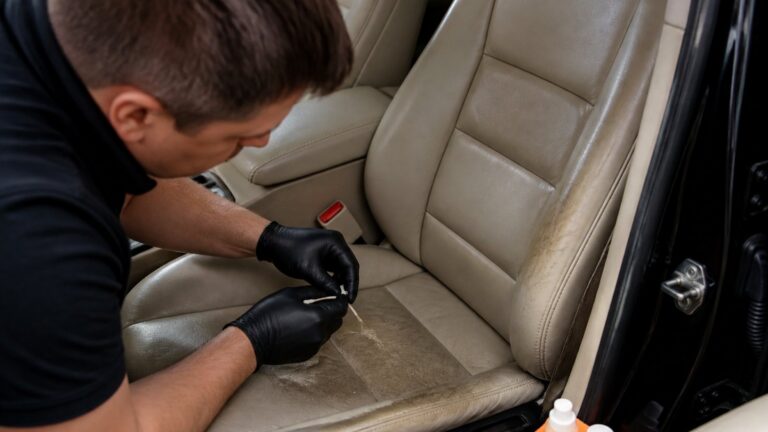
Fixing cat scratches on a leather sofa starts with the right supplies, not the right technique. Most failed DIY jobs happen because people grab the wrong product. At Uniqcare, we have over 40 years of experience repairing leather furniture across the West Midlands, and the same gaps show up again and again.
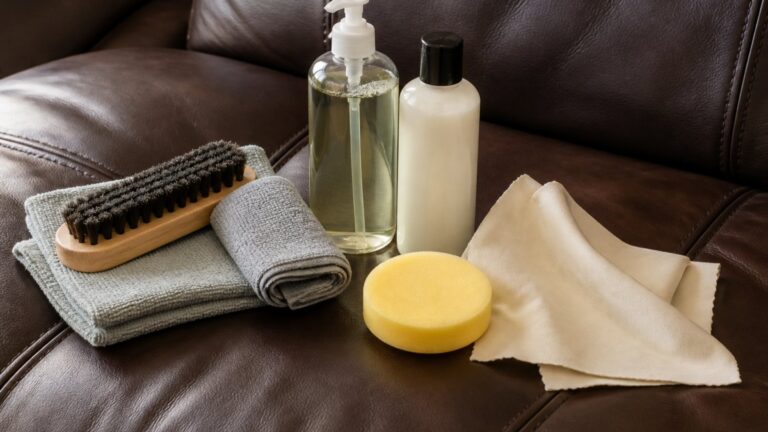
Here is what to gather before you touch the sofa:
- A leather-safe cleaner or mild soap flakes
- Two soft microfibre cloths
- A leather sofa scratch repair kit matched to your leather type
- Leather conditioner or balm
- A hairdryer on a low heat setting
- Cotton buds for tight areas
- Colour-matched leather filler for deeper damage
Check your sofa’s care label first. Aniline and semi-aniline leathers absorb products differently from protected or pigmented finishes, and using the wrong one can darken the surface permanently.
Never test a repair product on a visible cushion panel. Try it on the back or underside first. A mismatched colour on a hidden panel is a lesson; the same mistake on the seat is a replacement.
How to Clean a Leather Sofa Before Repair
Any repair sticks better to clean leather. Dirt, oils and cat saliva sit on the surface and stop filler and colour from bonding properly.
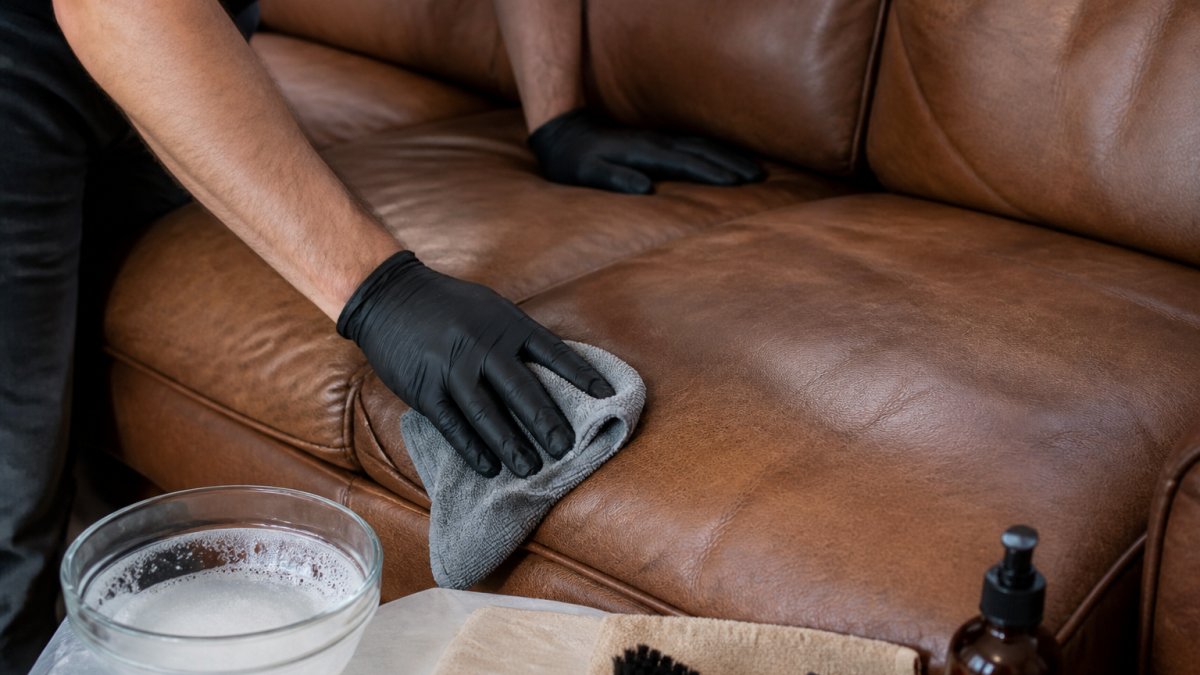
Follow this order:
- Vacuum loose hair and grit with a brush attachment.
- Wipe the whole panel with a damp cloth and a few drops of mild soap.
- Rinse with a clean, damp cloth and pat dry.
- Let the leather air dry fully before you assess damage.
Skip alcohol, bleach or household multi-surface sprays. They strip the finish and leave a patchy sheen that no colour product can hide. If the scratches sit near a seam, clean gently and avoid soaking the stitching.
Assessing the Damage: Surface Scratches vs Deep Tears
Not every scratch needs the same fix. Telling them apart saves you time and money.
Surface scratches are light marks in the top coat. The leather underneath is intact. Run a fingernail across the mark: if it glides over, it is surface damage.
Deep scratches cut through the pigment layer and may lift the grain. You will feel the nail catch. If the leather splits open or you can see the backing, that is a tear, not a scratch.
| Damage Type | What You See | Best Fix |
|---|---|---|
| Surface scratch | Light mark, no depth | Conditioner and buffing |
| Colour loss | Pale or white line | Colour balm or kit |
| Deep scratch | Nail catches, grain lifted | Filler and colour |
| Tear or split | Open leather, backing visible | Professional repair |
Most cat damage falls into the first two categories. That is good news, because both respond well to a careful home repair.
Using a Leather Sofa Scratch Repair Kit
A leather sofa scratch repair kit works well on surface scratches and light colour loss. The trick is patience, not pressure.
Work through it like this:
- Clean and dry the area first.
- Apply a small amount of colour product with a sponge or cloth.
- Blend outward in thin layers, not one thick coat.
- Dry between layers with a hairdryer on low heat.
- Buff gently once the colour matches.
Thin layers build an even finish. One heavy application leaves a raised, shiny patch that catches the light. If your kit includes a sealant, apply it last and let it cure overnight.
Cat claws often leave several parallel lines. Treat the whole panel, not just the visible marks. Blending across the full area hides the repair far better than spot-treating each line.
Repairing Deep Scratches in Leather
Repairing deep scratches in leather needs filler, not just colour. The scratch has to be level with the surrounding surface before any colour goes on.
The process:
- Clean the area and let it dry.
- Apply leather filler with a spatula, pressing it into the scratch.
- Wipe the excess so the filler sits level with the grain.
- Let it cure fully, then sand lightly if the kit advises it.
- Apply colour in thin layers to match the surrounding panel.
- Seal and condition once dry.
Take your time between steps. Rushing the cure is the single most common reason a deep repair fails within weeks. If the scratch is longer than a few centimetres or the leather feels brittle, stop and get it looked at.
Mistakes to Avoid When Repairing Cat Scratches
The same errors ruin most home repairs. Avoid these and your result improves straight away.
- Using shoe polish. It cracks, transfers onto clothing and never matches properly.
- Overfilling. Too much filler creates a bump that shows under any light.
- Skipping the clean. Dirt under the repair stops it bonding.
- Testing on a visible panel. Always test somewhere hidden first.
- Ignoring the cause. Without a scratching post or cover, your cat will return to the same spot.
That last point matters more than people expect. A perfect repair on a sofa your cat still uses as a scratching post is a temporary fix. Address the behaviour and the damage at the same time.
When to Choose Professional Leather Sofa Repair
Professional leather sofa repair makes sense when the damage is beyond a kit, when the colour is hard to match, or when the sofa is valuable enough that a failed attempt would cost more than the repair.
Call in a specialist if:
- The leather is torn or split open
- The colour is a custom or faded shade
- The damage covers a large area
- A previous DIY attempt made it worse
- The sofa is antique or high value
At Uniqcare, our CRB-checked technicians repair leather, fabric and carpets in your home, so your sofa never leaves the room. We match colour and texture to blend the repair into the surrounding panel, and we work from £45.
If a repair kit has already made the damage worse, stop. Every extra layer of product makes a professional colour match harder, not easier.
Conclusion
Cat scratches on a leather sofa are rarely a write-off, but they do need the right approach: clean first, assess honestly, and match the fix to the damage. Where a kit can handle surface marks, deep scratches and tears are best left to someone who does this daily.
If you would rather not risk a patchy result, Uniqcare restores leather, fabric and carpets in your home across the West Midlands. Our technicians are CRB checked, and we have over 40 years of experience. Get a quote and bring your sofa back to its best.
Frequently Asked Questions
Can cat scratches on a leather sofa be repaired at home?
Yes, shallow surface scratches often respond well to home treatment. Cleaning the area, then applying a leather conditioner or a colour-matched repair balm can minimise their appearance. For deeper scratches that have broken the surface, a leather sofa scratch repair kit with filler and colourant is needed. If the scratch is very deep or the leather is torn, professional leather sofa repair will give a better result.
How do you fix deep cat scratches or tears in leather?
Repairing deep scratches in leather requires filling the damaged area first. Clean the scratch, then apply a flexible leather filler in thin layers until it sits level with the surrounding surface. Once dry, apply a colour-matched leather dye or balm, then seal with a protective finish. Allow each layer to dry fully before moving on. If the tear goes through the leather, or the surrounding material is fragile, call a professional to avoid making it worse.
What is the best product for repairing cat scratches on leather?
The best product depends on the depth of the damage. For light surface scratches, a quality leather conditioner or a tinted leather balm often does the job. For deeper scratches, look for a leather sofa scratch repair kit that includes filler, colourant, and a sealing agent. Match the colour to your sofa carefully. Avoid generic kits that do not offer a colour match, as these often leave a visible patch.
When should you call a professional to repair a scratched leather sofa?
Call a professional when the scratch is deep, the leather is torn, or the damage covers a large area. DIY kits can make things worse if the colour does not match or the filler is applied too thickly. A professional leather sofa repair service can match the colour and texture precisely, and repairs are often carried out at your home. If you have already tried a kit and it failed, a professional can usually still fix it.