Table of Contents
- Why Leather Furniture Cracks Over Time
- The Main Causes of Cracking Leather
- How to Keep Leather Furniture From Drying Out
- Why Leather Sofas Peel (And How It Differs From Cracking)
- How to Prevent Cracked Leather
- How to Repair Cracked Leather Furniture
- When to Call a Professional
- Frequently Asked Questions
Last Updated: 20 October 2026
Why Leather Furniture Cracks Over Time
Leather furniture cracks because the hide loses moisture and its natural oils over the years, leaving the surface dry, brittle and prone to splitting where you sit and lean most. This guide from Uniqcare explains exactly why leather furniture crack problems develop, and how to prevent cracked leather before it starts.
We have repaired leather sofas, armchairs and car interiors for more than 40 years. In that time, one pattern comes up again and again. Cracking is rarely sudden. It builds slowly, quietly, in the places nobody looks until the damage is obvious.
Below, we’ll show you the causes, the fixes, and how to tell whether your sofa is worth saving. But first, here’s what most guides get wrong: cracking is not a sign your furniture is cheap or finished. It is usually a sign of dryness, and dryness can be managed.
The Main Causes of Cracking Leather
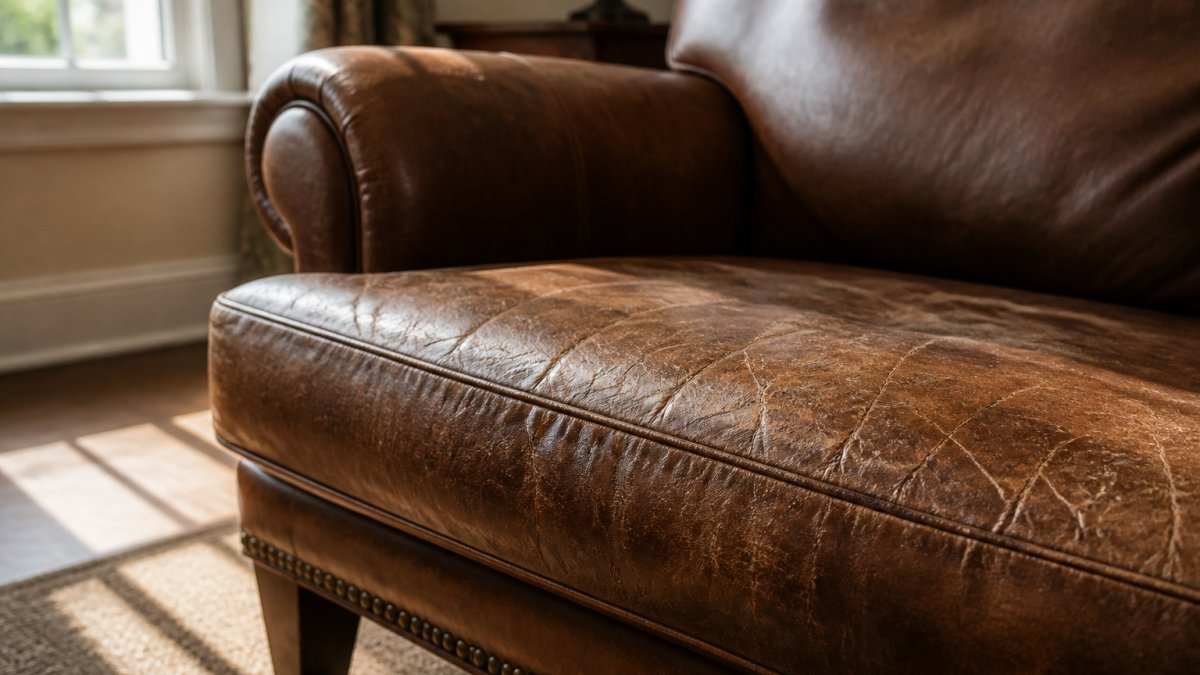
Cracking leather comes down to moisture loss. When the hide dries out, the fibres tighten and the surface loses its flexibility. Add regular wear and the coating starts to split.
Dryness and Loss of Natural Oils
Leather is skin. It needs oils to stay supple, just as your own hands do. Central heating, low humidity and harsh cleaning products all strip those oils away. Once the oils are gone, the surface hardens. A common mistake is cleaning leather with household sprays or wipes. These can dry the finish and speed up the damage.
Sunlight, Heat and Central Heating
Direct sunlight and radiators are two of the biggest culprits. UV light breaks down the protective coating, and constant heat pulls moisture from the hide. A sofa placed right beside a radiator or a south-facing window will always age faster than one in a shaded spot.
How to Keep Leather Furniture From Drying Out
Keeping leather furniture from drying out is mostly about routine. A little care, done often, beats a big rescue job later.
- Keep furniture at least 30cm away from radiators and fires
- Use blinds or curtains to soften strong afternoon sun
- Dust weekly with a soft, dry cloth
- Clean with a pH-balanced leather cleaner, never household sprays
- Apply a leather conditioner two to four times a year
- Wipe up spills straight away with a clean, dry cloth
Condition leather in autumn, before the heating goes on. That is when the air in most homes turns dry, and a fresh layer of conditioner gives the hide a buffer for the winter months.
Why Leather Sofas Peel (And How It Differs From Cracking)
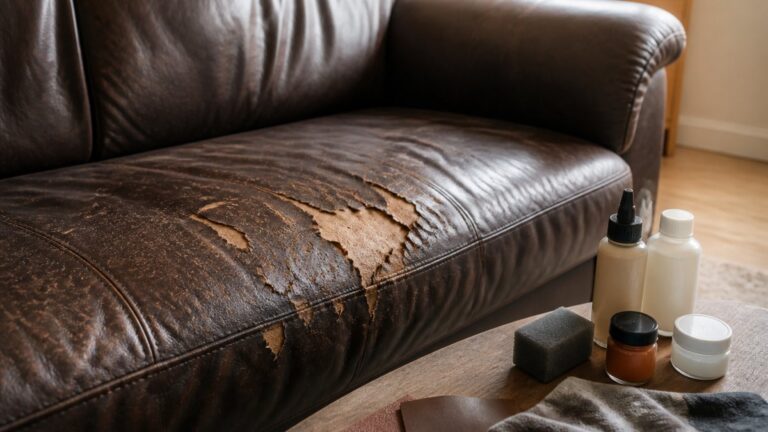
Peeling and cracking are not the same problem. Cracking happens when the hide dries and splits. Peeling happens when the top coating separates from the leather beneath it.
Bonded and corrected-grain leathers are most prone to peeling. These are made from lower-grade hide with a sprayed-on surface, and that surface can lift over time. Genuine full-grain and top-grain leathers rarely peel, though they can still crack if they dry out.
So why do leather sofas peel faster in some homes than others? Heat, sweat and body oils all weaken the coating where you sit. If the surface flakes in sheets rather than splitting into lines, you are dealing with peeling, not cracking. It is a different repair, and it is worth knowing which one you have before you buy any product.
How to Prevent Cracked Leather
Preventing cracked leather is far easier than fixing it. The good news is that the steps are simple and cheap.
- Condition regularly, especially before winter
- Keep the furniture out of direct sun and away from heat sources
- Never use alcohol, bleach or abrasive cleaners
- Rotate cushions so wear is spread evenly
- Cover sharp buckles, keys and pet claws that catch the surface
- Treat small scuffs early, before they grow
Ignoring a small crack is the most common mistake we see. Once the surface splits, dirt and moisture get into the hide, and the crack widens fast. A quick repair early on costs far less than restoring a whole panel later.
How to Repair Cracked Leather Furniture
Repairing cracked leather furniture depends on how deep the damage goes. Surface cracks can often be improved at home. Deep splits and peeling usually need a professional.
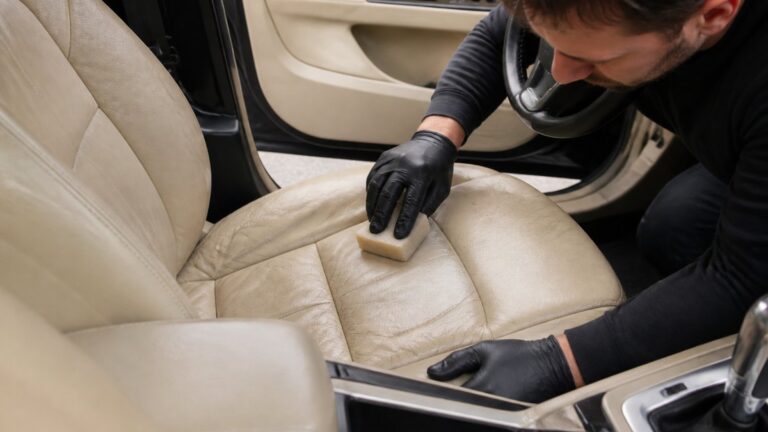
For light surface cracks, a leather filler and colour-matched balm can smooth the area and restore some flexibility. Clean the spot first, let it dry fully, then work the filler into the crack in thin layers. Finish with a conditioner to protect it.
What most guides miss is colour matching. A repair that does not match the surrounding hide will always look patchy, no matter how neat the filler. That is where home kits often fall short.
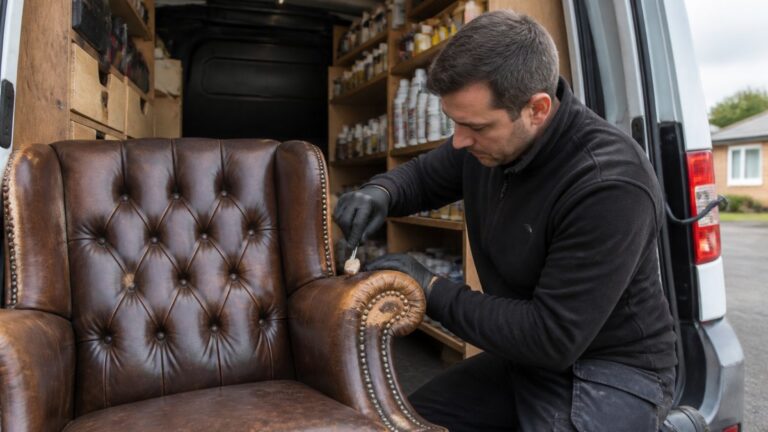
At Uniqcare, our technicians carry out repairs at your home, matching colour and texture so the repair blends into the piece. We handle cuts, scrapes, wear patches and cracks across leather, fabric and carpets. Our service starts from £45, and our technicians are fully CRB checked.
The best fix for cracked leather is early action. A small repair done soon protects the hide and keeps the piece in use, rather than letting damage spread across a whole panel.
When to Call a Professional
Call a professional when the damage is deep, wide, or spreading. Signs it is time to get help:
- Cracks that go through to the backing
- Peeling that lifts in sheets
- Damage across a large area or several panels
- A repair you tried that looks worse than before
- A piece with sentimental or resale value
We understand the worry about cost. Our approach is to assess the damage honestly and tell you whether a repair is worth it. If a piece is beyond saving, we will say so. Most sofas, armchairs and car seats we see can be restored, and the repair is often far cheaper than replacing the furniture.
Leather that cracks does not have to mean the end of a good piece of furniture. The cause is usually dryness and wear, and both can be managed with the right care and an early repair. If your sofa, armchair or car interior is showing cracks, peeling or wear patches, Uniqcare can help. With over 40 years of experience, fully CRB checked technicians, and repairs carried out at your home, we restore comfort, value and appearance with minimum fuss. Get a quote from Uniqcare and bring your furniture back to life.
Frequently Asked Questions
Why does leather furniture crack over time?
Leather furniture cracks over time mainly because the hide loses its natural oils and moisture. Everyday use, low humidity, central heating and direct sunlight all dry the surface out, so it becomes brittle and splits along flex points such as seat edges and armrests. Body oils, sweat and friction speed this up. Once the top layer is compromised, small cracks widen with each sit, which is why early conditioning matters far more than most people realise.
Does real leather crack or peel?
Real leather cracks rather than peels. Genuine hide splits and fissures when it dries out, showing fine lines that deepen over time. Peeling is usually a sign of bonded or faux leather, where a polyurethane coating separates from a fabric backing. If your sofa is shedding flakes rather than splitting, it is likely a coated material, and the repair approach is different. A professional assessment will confirm which you have before any work begins.
How often should I condition leather furniture?
Condition leather furniture every three to six months in normal conditions, and more often in dry or heated rooms. If the leather feels stiff, looks dull or shows fine lines, it is overdue. Apply a small amount of a pH-neutral leather conditioner with a soft cloth, work it in gently and buff off any excess. Over-conditioning can leave a sticky film, so stick to a thin, even layer rather than repeated heavy coats.
Can dry leather furniture be restored?
Dry leather furniture can often be restored if the damage has not gone through to the backing. Rehydration with a suitable conditioner, followed by professional colour matching and filling of any splits, can bring tired leather back to a usable, presentable state. Deep cracks and torn seams need a technician’s attention, but many pieces that look beyond saving are repairable at home. A quote will tell you whether repair is worth it against replacement.